To plant lavender, choose a spot with at least six hours of direct sun and fast-draining soil, plant it level with the surrounding soil at the same depth it grew in its pot, and space plants 18 to 24 inches apart. Plant in spring in most climates. Water it well the first season, then water rarely. Lavender dies from wet roots far more often than from drought.
Lavender comes from dry, rocky Mediterranean hillsides, and it grows best when you treat it that way. Poor, gritty soil, lots of sun and little water give the sturdiest plants and the strongest scent. This guide covers planting in the ground and in pots, starting from seed and cuttings, pruning, saving a struggling plant and harvesting the flowers.
How to plant lavender at a glance
| Question | Short answer |
|---|---|
| Best time | Spring, once the soil warms. Fall in hot or mild climates |
| Sun | 6 or more hours of direct sun |
| Soil | Light, gravelly, fast draining, neutral to a little alkaline |
| Depth | Same depth as the nursery pot. Never bury the stem |
| Spacing | About 18 to 24 inches. Closer for a hedge |
| Pot size | 12 to 16 inches wide, with drainage holes |
| Water | Deeply but rarely once established |
| Prune | After flowering, about a third of the green growth |
| Easiest way to start | A nursery plant. Seed is slow |
| Biggest mistake | Too much water or heavy soil |
Which type of lavender should you plant?
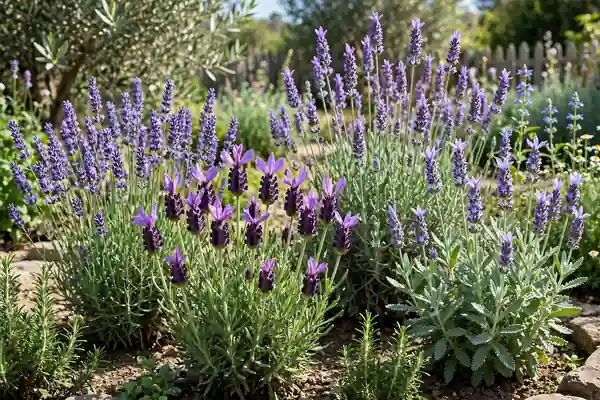
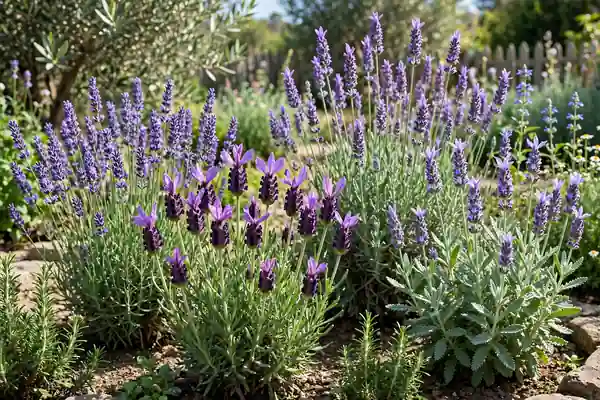
Choose by climate. English lavender is the hardiest, and Munstead and Hidcote are the common English types. French and Spanish lavender have showier flowers but need milder winters. Lavandin is a large hybrid with long stems that suits hedges and drying. Sources give English lavender a hardiness range of roughly zones 5 to 8 or 5 to 10, so check the plant tag for your zone.
- English (Munstead, Hidcote): compact, hardy and the usual pick for cooking and cold-winter gardens.
- French and Spanish: toothed leaves and rabbit-ear flowers. They suit warm, dry gardens and pots you can move.
- Lavandin: a cross that grows larger, with long flower spikes. Good for big borders and bundles.
- Buying: nursery plants are the easiest way to start and bloom the first year.
When is the best time to plant lavender?
Plant in spring, once the soil is starting to warm and frost has passed. This gives roots a full season to settle. Fall planting works if you have about two months of mild weather before winter, and in hot, dry climates fall is often the best time because roots can settle before summer heat.
- Cold climates: spring only, so the plant is established before the first winter.
- Mild or hot climates: fall planting avoids summer stress.
- Winter or very early spring: wait for the soil to warm, or start plants in pots indoors.
- Late planting: a plant set out too late in fall may not survive a cold winter.
Where should you plant lavender?
In full sun, with light, fast-draining soil and good airflow. Lavender needs at least six hours of direct sun, and more is better. Hot Deep South and desert gardens may do better with a little afternoon shade.
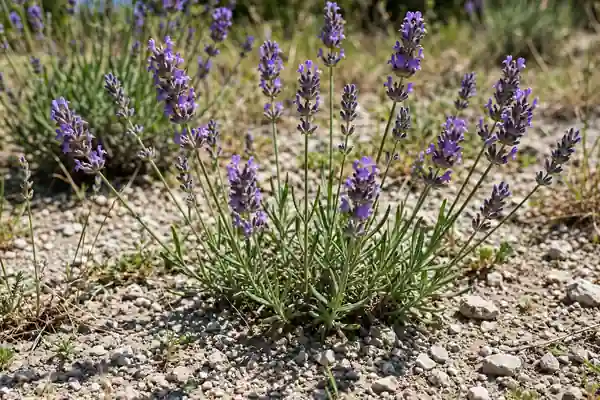
- Soil: sandy, gravelly or rocky. Rich, heavy or wet soil causes root rot.
- pH: neutral to slightly alkaline. English lavender does well around pH 6.5 to 7.5. Add lime to acidic soil if a soil test says so.
- Drainage test: dig a hole, fill it with water and see how fast it drains. If water stays more than a few hours, build a mound or raised bed.
- Companions: lavender pairs well with other dry-soil herbs such as rosemary, thyme and sage, since they share the same needs. Do not plant it with thirsty plants.
- Avoid: low spots, lawn sprinklers and bark mulch, which hold moisture around the stem.
How do you plant lavender in the ground?
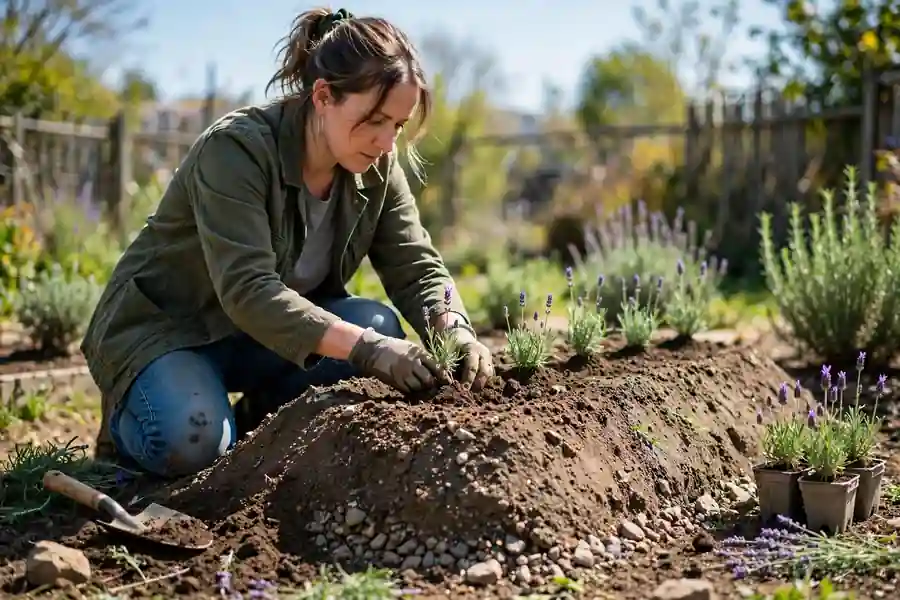
Dig a hole as deep as the root ball and twice as wide, set the plant level with the soil and firm the soil lightly around it. In heavy soil, plant on a mound or in a raised bed and mix gravel into the hole. Do not add rich compost or fertilizer, since lavender likes lean soil.
- Choose the spot and check drainage.
- Improve the soil if it is heavy: mound it 12 to 24 inches high, or mix in coarse sand and gravel. Gravel at the bottom of the hole helps too.
- Remove the plant from its pot and loosen the roots gently.
- Set it at the same depth it grew in the pot. The top of the root ball should be level with the soil, and the stem must not be buried.
- Backfill with the native soil, and press it lightly.
- Water well once, then let the soil dry.
- Mulch with gravel or stone, not bark. Stone mulch reflects heat and keeps the crown dry.
- Space the plants so air can move between them.
How deep should you plant lavender?
Plant it at the same depth as it sat in the pot, with the crown at or just above the soil surface. Burying the stem keeps it damp and invites rot. In heavy soil, plant a little high on a mound. Seeds go on the surface or covered with only a thin layer of soil, since they need light to sprout.
How far apart should you plant lavender?
About 18 to 24 inches for most English types, and up to 3 feet for big lavandin. Sources vary, with spacing of 12 to 18 inches suggested for compact plants and a hedge. Give more room if humidity is high, since crowded plants stay wet and get disease.
| Use | Spacing |
|---|---|
| Compact English types in a border | 18 to 24 inches |
| Low hedge | 12 to 18 inches, or about 18 inches if you want airflow |
| Large lavandin | 24 to 36 inches |
| Pots | One plant per 12 to 16 inch pot |
How do you plant lavender in a pot?
Use a pot at least 12 to 16 inches wide with drainage holes, a gritty potting mix and a sunny spot. Pots suit cold climates, since you can move them, and wet climates, since you control drainage.
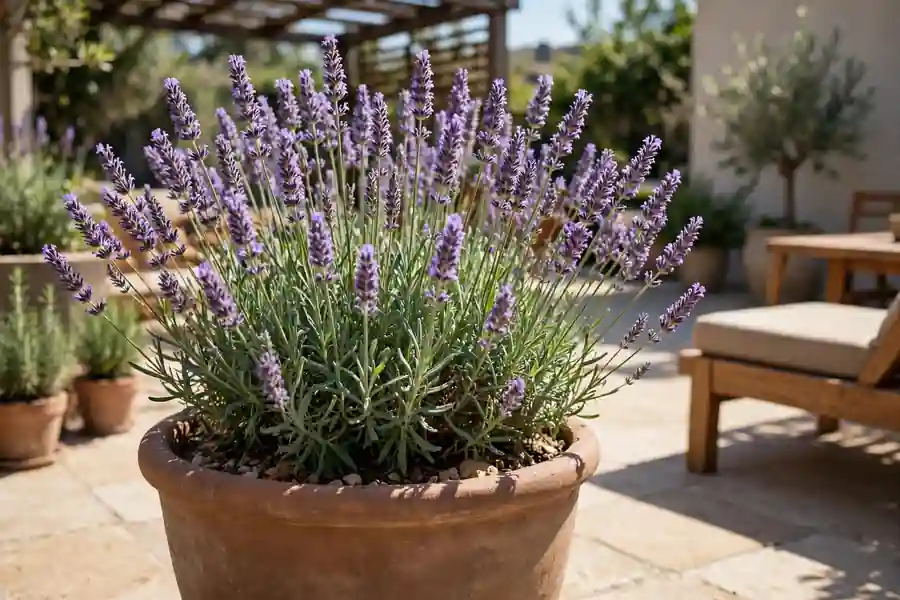
- Mix: potting soil plus about a third perlite, sand or pumice. Do not use plain garden soil.
- Water: when the top inch or two of soil is dry. Pots dry quickly in summer, but it is safer to underwater than overwater.
- Terracotta: this clay lets water evaporate, so soil dries faster than in plastic.
- Winter: pots are more exposed to cold than the ground. Move them to a sheltered spot, keep them fairly dry and protect them from freezing rain.
- Repot every two or three years into a slightly larger pot.
Can you grow lavender indoors?
Sometimes. Lavender wants six to eight hours of direct sun, so an indoor plant needs a bright south-facing window or a grow light. It also wants airflow and dry soil, and indoor plants often struggle. A potted plant that spends summer outside and winter in a cool, bright room does better than one kept inside all year. Water only when the soil is dry, and use a pot with drainage.
How do you grow lavender from seed?
Chill the seed, sow it on the surface of a gritty mix, keep it warm and wait. Lavender seed is slow and unreliable, and plants may take up to two years to bloom. Seed-grown plants also may not match a named variety, so it suits hardy English types and patient gardeners.
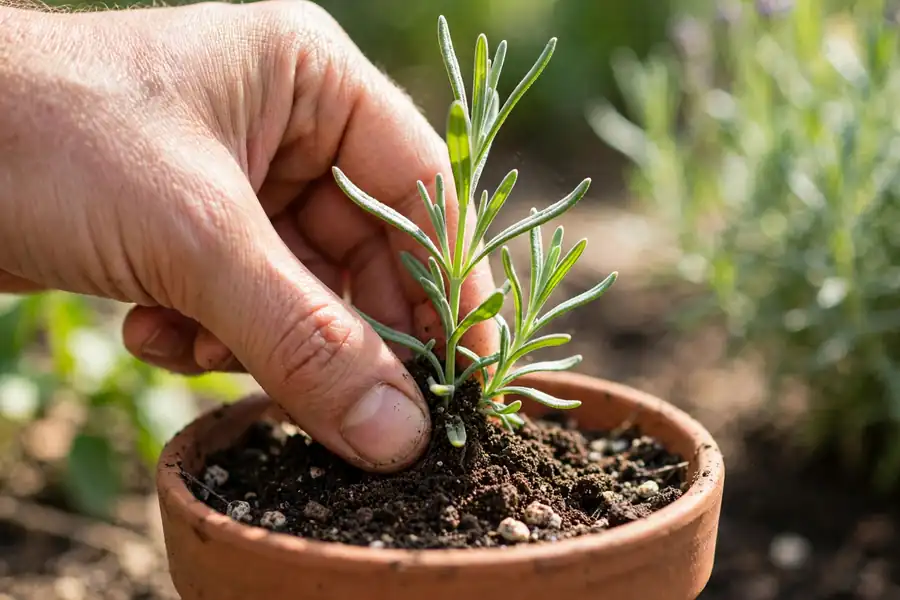
- Chill the seed in a damp paper towel or sealed bag in the fridge for several weeks, which helps germination.
- Sow on the surface of moist, gritty seed mix, and press it down or cover with a very thin layer.
- Keep it warm (about 65 to 70°F) and bright. Sprouting can take two to four weeks or longer.
- Thin and pot on when seedlings have a few sets of leaves.
- Harden off and plant out in spring after frost.
How do you grow lavender from cuttings?
Cuttings are faster and give exact copies of a plant you like. In spring or early summer, snip 3 to 4 inch green tips of new growth from stems without flowers, strip the lower leaves and push them into damp, gritty mix. Keep them warm, bright and just damp. Roots usually form in about two to four weeks. Pot them up and plant out when they are growing well. Softwood cuttings can rot if kept too wet.
Dividing a lavender plant rarely works, since old plants are woody. Layering a low stem works for some types. Lavender does not grow from bulbs, so an offer of lavender bulbs is not a real lavender plant.
How often should you water lavender?
Water deeply at planting and weekly for the first season in dry weather, then only in long dry spells. Established lavender in the ground often needs little or no extra water. In pots, water when the top inch or two is dry. When in doubt, wait a day or two. Overwatering and soggy soil cause root rot, which shows up as browning leaves.
Do not fertilize heavily. Rich soil makes soft, leggy growth and fewer flowers. A light spring top-dressing with gravel or a small amount of compost is enough in poor soil.
How do you prune lavender?
Prune after flowering, and cut back about a third of the green growth, never into bare old wood. Lavender does not regrow well from woody stems, so keep the cut above the leaves. This keeps plants compact and slows woody growth.
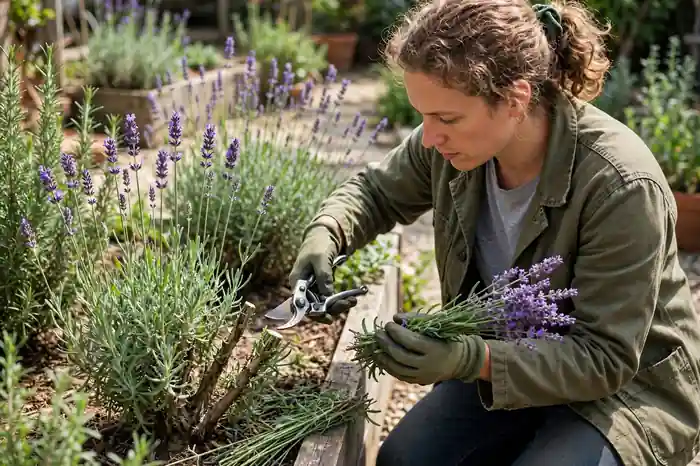
- When: after the main bloom in summer. A light trim in early spring tidies the shape and removes winter damage.
- How much: some sources say a third, others about 20 percent. Either way, leave green leaves on every stem.
- Deadheading: removing spent flowers encourages more blooms on some types.
- Woody plants: if a plant has gone woody, trim the green growth lightly each year and take cuttings as a backup. A hard cut into wood often kills it.
- Potted plants: prune the same way, and in the same season.
How do you revive a dying lavender plant?
Find the cause first. Most dying lavender suffers from wet roots, heavy soil, too little sun or old age. Scratch a stem with a fingernail. Green underneath means it is alive.
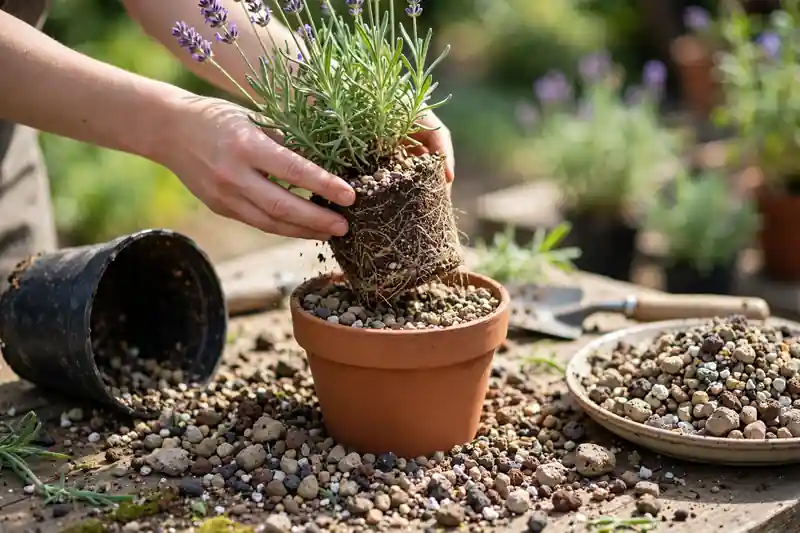
- Brown, wilting, wet soil: root rot. Stop watering, let the soil dry, improve drainage or move the plant to a gritty mix or a mound. Remove rotted roots if you repot. Remove affected stems.
- Crisp, dry plant in a pot: water deeply once and then let it dry. Do not flood it.
- Brown tips in cold weather: winter damage. Wait until spring, then prune dead stems back to green growth.
- Woody and sparse: it is aging. Take softwood cuttings from healthy tips to start a new plant.
- Too much shade: move it to full sun.
- Dead plant: if stems are brittle and brown all the way, it is gone. Start over with a new plant.
How do you care for lavender in winter?
Keep the soil dry and protect the roots in cold climates. In cold regions, a layer of mulch around the plant can help roots, but keep it off the stems and use loose, dry material or gravel. Do not cut back hard in fall. Pots should move to a sheltered spot, such as against a wall or into an unheated garage or cold frame, and be kept fairly dry. Wet cold kills lavender faster than dry cold.
How do you harvest and use lavender?
Cut stems when the buds are colored but not all open, in the morning, above the leaves. Tie small bundles, hang them upside down in a dark, airy place for two to three weeks and use them for sachets, tea, baking or crafts.
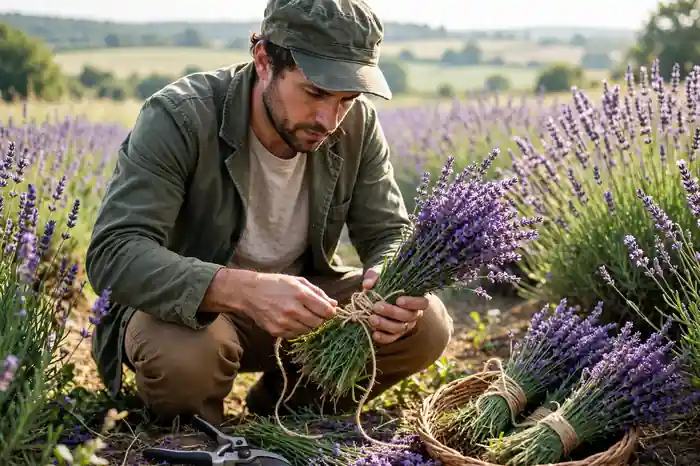
- Tea: use dried flower buds from English types such as Munstead or Hidcote, and use a small amount, since it is strong. Use only plants not treated with chemicals.
- Oil: home gardeners can steep dried flowers in a carrier oil for a scented oil. Pure lavender oil needs steam distillation, which is not practical at home.
- Scent: dried flowers keep their fragrance in a bowl, sachet or drawer.
- Cutting: leave the green growth below the cut so the plant keeps its energy.
What are common mistakes when planting lavender?
Overwatering, heavy soil, too much shade, rich soil, bark mulch, burying the stem and hard pruning into wood. Fix those and you fix most lavender problems. Also avoid planting it too close together, since poor airflow brings disease.
How much does it cost to plant lavender?
Nursery plants often cost about $6 to $20 each, and larger pots cost more. Add gravel, sand and a pot if needed, a few dollars each. A seed packet costs a few dollars. These are rough 2026 estimates that vary by region and size, so check local prices.
Quick answers to common questions
What month is best to plant lavender?
Spring, once the soil warms, in most climates. Fall is better in hot or mild climates.
How far apart should you plant lavender?
About 18 to 24 inches for most English types, and up to 3 feet for big lavandin. Hedges can be a little closer.
How deep should you plant lavender?
At the same depth it grew in its pot, with the crown at or just above the soil. Do not bury the stem.
How often should you water lavender?
Deeply at planting and weekly for the first season in dry weather, then rarely. In pots, water when the top inch or two is dry.
How do you revive a dying lavender plant?
Check for root rot, let the soil dry, improve drainage, give it full sun and trim green growth lightly. If it is mostly woody, take cuttings from healthy tips.
Keep reading: how to compost, natural weed killer, how to grow lettuce and more lawn and garden guides.
Is it worth learning how to plant lavender?
Yes. Lavender gives scent, color and pollinator-friendly flowers for years with little work, once it is in the right place. The key to how to plant lavender is simple: full sun, gritty soil, the right depth and spacing and very little water. Get those right and it can last a decade.