To grow lettuce, sow seeds about a quarter inch deep in loose, damp, fertile soil in cool weather, in a spot with sun for most of the day, and keep the soil evenly moist. Leaf lettuce is ready in about 4 to 7 weeks, and heading types take 8 to 14 weeks. Plant again every two weeks for steady harvests. Lettuce grows in garden beds, pots, window boxes and indoors under a light.
Lettuce is one of the quickest and easiest vegetables to grow at home. It likes cool weather, it needs little space and you can start picking leaves within a month. The tricky part is heat, which makes it bolt, or send up a flower stalk, and turn bitter. This guide covers every common way to grow it, from a garden row to a kitchen windowsill, and how to keep it going all year.
How to grow lettuce at a glance
| Question | Short answer |
|---|---|
| Best time to plant | Early spring and late summer to fall, when it is cool |
| Sun | Full sun in cool weather, partial shade in heat |
| Seed depth | About 1/4 inch |
| Spacing | 4 to 10 inches for leaf and romaine, 12 to 15 for iceberg |
| Time to harvest | About 4 to 7 weeks for leaf, 8 to 14 for heads |
| Water | Steady and even, about 1 inch a week |
| Easiest type | Loose-leaf |
| Pots or ground? | Both work. Pots are easy to move out of heat |
| Indoors? | Yes, with a grow light and a cool room |
| From scraps? | A stump regrows a few leaves, not a full head |
Which type of lettuce should you grow?
Start with loose-leaf. It is the easiest, the fastest and the most forgiving. Butterhead and romaine are next, and iceberg, the tight head you see in stores, is the hardest because it needs a long, cool season and bolts quickly in heat.
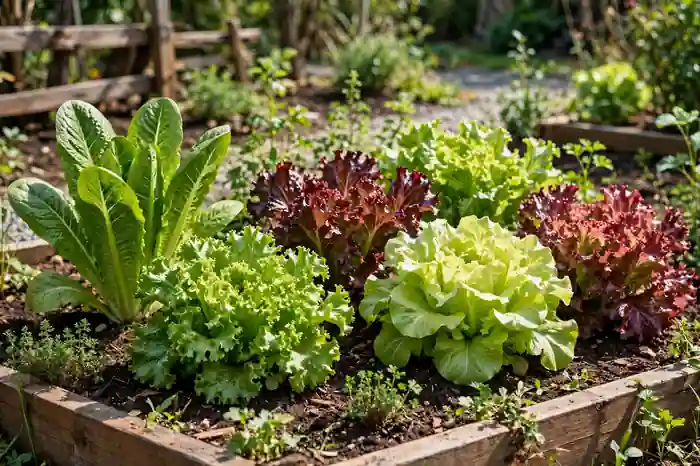
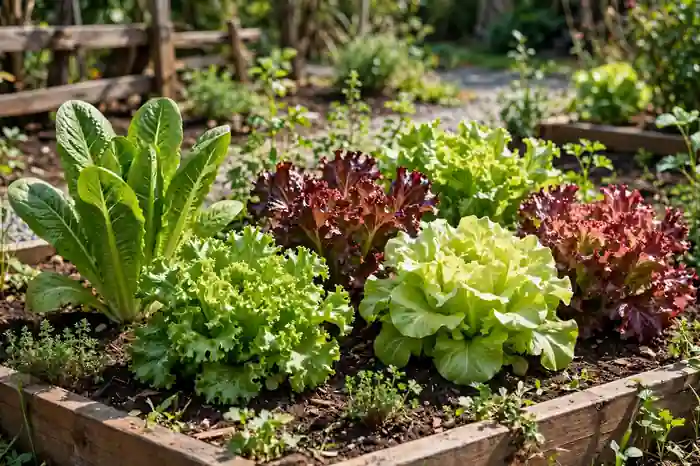
- Leaf lettuce: forms loose bunches and can be harvested leaf by leaf. Common varieties include Black Seeded Simpson, Salad Bowl, Red Sails, Red Oakleaf and Cimarron.
- Butterhead: soft, buttery leaves in a loose head. Bibb, Boston, Buttercrunch and Little Gem are common types.
- Romaine (cos): tall, upright heads with crisp ribs. Red romaine and mini romaine are also sold.
- Iceberg (crisphead): a tight, crunchy head. It takes more time and careful watering.
- Mixes: mesclun and salad mixes grow quickly and are good for cut-and-come-again harvests.
Garden centers and seed packets list days to maturity and heat tolerance, so check them. Slow-bolting types are best for late spring and summer.
How hard is it to grow lettuce?
Not hard. Lettuce has shallow roots, grows fast and tolerates part shade. Most problems come from heat, dry soil and slugs. If you plant at the right time and keep the soil damp, even a beginner gets a good crop.
When should you plant lettuce?
Plant in early spring, as soon as the soil can be worked, and again in late summer for a fall crop. Lettuce grows best in cool weather, roughly 60 to 70°F, and handles light frost. Heat above about 80°F, especially for several days, pushes it to bolt and makes the leaves bitter.
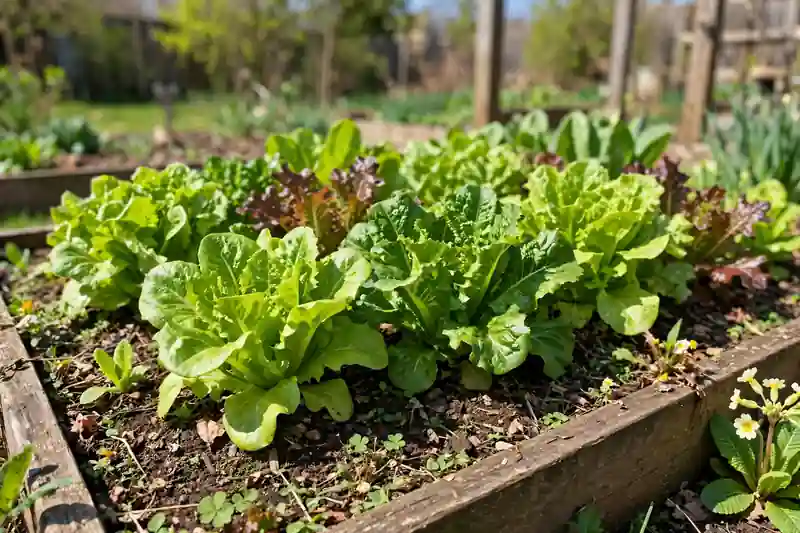
- Spring: sow outdoors a few weeks before your last frost date. Plant a new row every two weeks for steady harvests, called succession planting.
- Summer: choose slow-bolting or heat-tolerant types, plant in part shade or under a 30 to 50 percent shade cloth and water often.
- Fall: sow in late summer so plants mature as the weather cools. Many gardeners find fall lettuce sweeter than spring lettuce.
- Winter: in mild climates, lettuce grows through winter. In cold ones, use a cold frame or row cover, or grow it indoors.
Use your climate, not a state name, to decide. If summers are very hot, plant in fall, winter and early spring. If winters freeze, plant in spring and again in late summer. Check your local extension office for exact dates.
Where is the best place to plant lettuce?
Choose a spot with morning sun, afternoon shade in hot weather and loose, fertile, well-drained soil. Lettuce needs about 4 to 6 hours of sun at minimum, and full sun is fine in cool weather. The soil should be rich in organic matter and stay evenly damp. A slightly acidic to neutral soil suits it.
Mix in compost before planting, since lettuce is a leafy crop that likes nitrogen. See how to compost. Raised beds warm early in spring and drain well.
How do you grow lettuce from seed?
Sow the seeds about 1/4 inch deep, cover them lightly and keep the soil damp. Lettuce seeds are tiny, so scatter them thinly in rows or small patches. They sprout in about a week, sometimes sooner in mild weather, and they germinate best in cool soil, roughly 45 to 75°F. Hot soil slows germination.
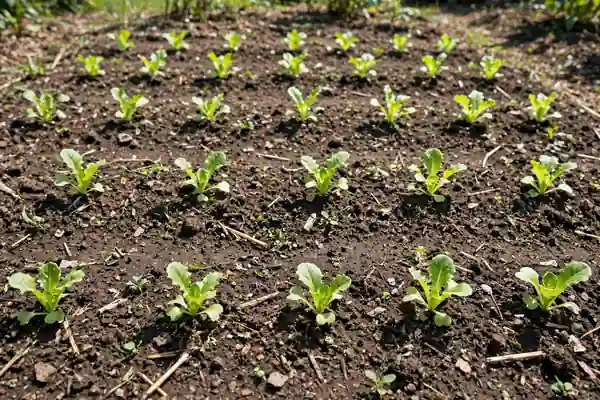
- Prepare the bed. Rake the soil smooth and mix in compost.
- Sow the seeds thinly, about 1/4 inch deep, in rows 12 to 24 inches apart.
- Water gently so the seeds do not wash out, and keep the surface damp until they sprout.
- Thin the seedlings to the final spacing. Allow 4 to 10 inches for leaf, butterhead and romaine, and 12 to 15 inches for iceberg. Eat the thinnings.
- Mulch lightly to keep soil cool and damp.
- Plant again every two weeks for a continuous harvest.
You can also start seeds indoors in trays 3 to 4 weeks before planting out, or buy small transplants from a garden center. Transplants save time, but lettuce direct-sown into the garden usually does fine.
How long does lettuce take to grow?
Leaf lettuce takes about 4 to 7 weeks from seed, butterhead and romaine about 8 to 11 weeks and iceberg about 10 to 14 weeks. Baby leaves can be cut in 3 to 4 weeks. Times vary by variety, weather and whether you grow it in soil, a pot or a hydroponic system.
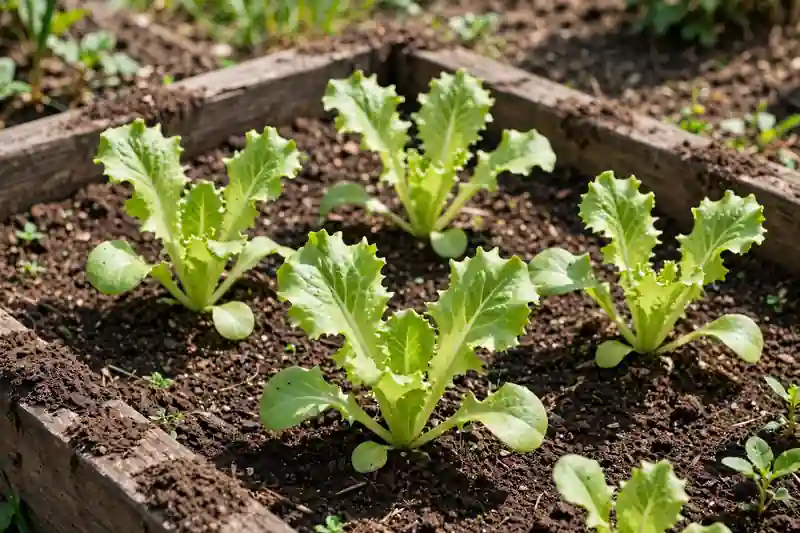
- From seed to sprout: about 2 to 10 days.
- Romaine: about 55 to 75 days, a bit less for mini types.
- Iceberg: about 70 to 100 days and often longer in cool weather.
- Butterhead and Bibb: about 45 to 70 days.
- In pots: about the same as in the ground, and sometimes faster because pots warm early.
- Indoors under lights: leaves in about 4 to 6 weeks, and heads may take longer.
- Hydroponic lettuce: often ready in about 4 to 6 weeks, depending on the system and light.
- To grow it faster: choose fast leaf types, keep soil damp and cool, feed with compost or a light nitrogen fertilizer and thin early so plants do not compete.
How much water, sun and fertilizer does lettuce need?
Give it about 1 inch of water a week, a few hours of sun and a light feeding. Lettuce has shallow roots, so it dries out fast. Water at the base in the morning, keep the soil evenly damp and mulch to hold moisture. Uneven watering causes bitter, tough leaves and tip burn.
- Sun: 4 to 6 hours or more. Provide afternoon shade in hot weather.
- Fertilizer: work compost into the bed, and side-dress with a balanced or nitrogen-rich fertilizer if growth is slow. Do not overdo it, since lettuce is sensitive to salts.
- Weeding: keep weeds down, since the roots are shallow.
- Depth of soil: roots stay in the top several inches, so lettuce needs loose soil but not deep soil.
How do you grow lettuce in pots and containers?
Use any container with drainage holes and at least 6 inches of soil, fill it with potting mix and sow thinly. Lettuce is one of the best vegetables for containers because the roots are shallow. Wide beats deep.
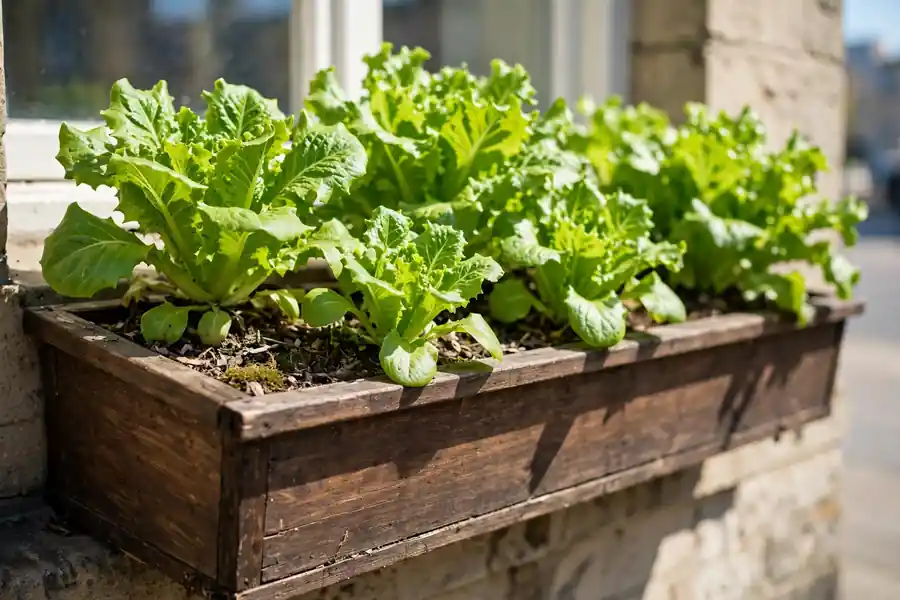
- Potting mix: use a light potting mix, not garden soil.
- Water: check daily in warm weather, since pots dry out faster than beds.
- Heat: move pots to shade in hot weather. This is the big advantage of containers.
- Fertilizer: feed lightly every few weeks, since nutrients wash out of pots.
- Balconies and small spaces: a window box or planter on a railing works for leaf lettuce, and you can pick leaves as you need them.
Lettuce grows well in the ground or in pots. The ground holds moisture better and needs less watering, and pots give you control over heat and soil. Raised beds sit in between.
Can you grow lettuce indoors or year round?
Yes. Lettuce does well indoors under a grow light or in a very bright window, as long as the room is cool. A sunny window alone is often not enough in winter, so a grow light on for about 12 to 16 hours a day gives better results.
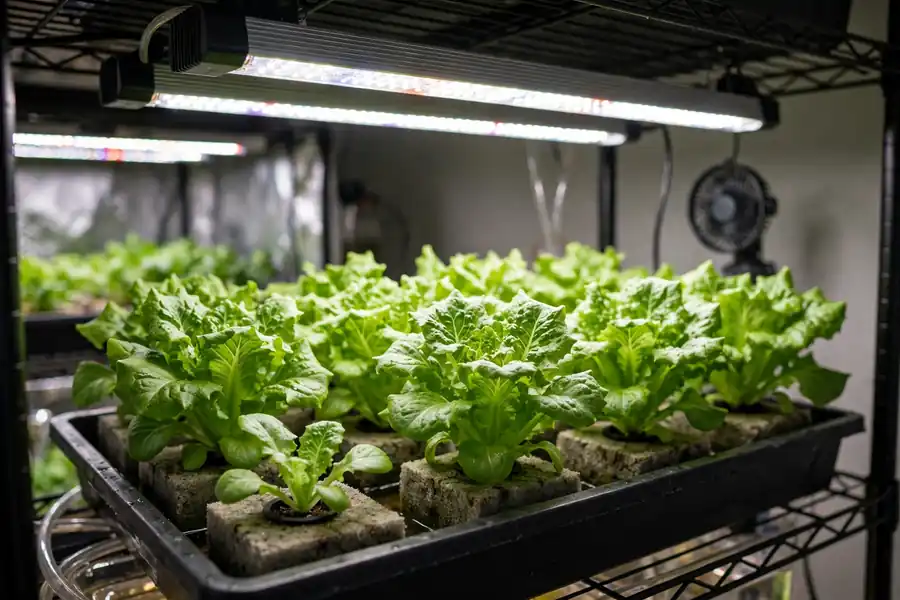
- Choose leaf and butterhead types or mini romaine. They are compact and fast.
- Use a shallow tray with drainage and potting mix.
- Keep it cool. A warm room causes leggy, bitter plants.
- Add airflow with a small fan, which helps prevent mold and tip burn.
- Hydroponic lettuce: lettuce grows well in water-based systems with a nutrient solution and strong light. Many kits are made for countertop use and can give a harvest in about 4 to 6 weeks. Lettuce grown in plain water without nutrients runs out of food, so use a hydroponic nutrient mix.
- Year-round: combine garden planting in spring and fall, a cold frame in winter and indoor trays whenever you want fresh greens.
Can you regrow lettuce from scraps?
Yes, but only a little. A romaine stump regrows a few small leaves in water, not a full head. It is a fun project and gives a sandwich-sized harvest, not a salad.
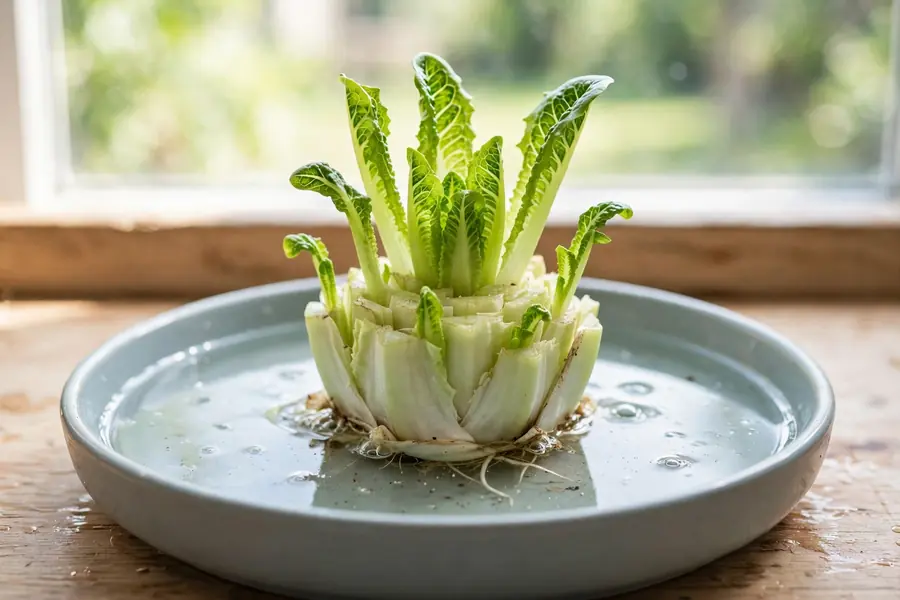
- Cut the head about 1 inch above the base and keep the stump with its roots end.
- Set it in a shallow dish with about 1/2 inch of water, cut side up.
- Put it in a sunny window or under a grow light.
- Change the water every 1 to 2 days.
- Harvest the small leaves in about two weeks. After that, growth often turns bitter or starts to flower.
You can also plant the stump in soil after roots grow. It may give more leaves, but a full head is unlikely. Plants regrown from store-bought stumps, cores, stems or roots work the same way. For a real head of lettuce, you need to start from seed or a transplant. Growing lettuce without seeds works only from scraps, and only for a few leaves.
How do you harvest lettuce?
Pick the outer leaves first, or cut the whole head. Leaf lettuce is ready when leaves are about 5 to 6 inches tall. Cut or snap outer leaves and leave the center to keep growing, which is called cut-and-come-again. Head types are ready when they feel firm and reach full size. Cut at the base in the cool of the morning.
- Cut-and-come-again: take the outer leaves, leave an inch or two of the base and the plant regrows for another picking or two.
- Whole heads: cut at soil level. Some plants resprout.
- Baby leaves: cut when 3 to 4 inches tall. Mixes of leaf lettuce grow well this way.
- Microgreens: lettuce seeds sown thickly in a tray can be cut in about 1 to 2 weeks.
- Storage: rinse, dry and keep in the fridge in a bag or container with a paper towel.
How do you grow lettuce in summer or hot weather?
Choose heat-tolerant types, give shade and water often. Lettuce bolts in heat, which makes the leaves tall, flowery and bitter. A 30 to 50 percent shade cloth lowers the temperature and can reduce bitterness, though trials show shading may increase bolting in sensitive varieties. Plant it on the east side of taller plants, water in the morning and pick early.
If it bolts, pull it and replant in fall. Loose-leaf and some butterhead and romaine varieties are slower to bolt than iceberg.
How do you grow lettuce in fall and winter?
Sow in late summer or early fall, and protect plants when nights get cold. Lettuce handles light frost, and many types tolerate a little more. Row covers, cold frames, low tunnels and unheated greenhouses keep plants growing into winter. Cover when nights drop below about 40°F, but open covers on sunny days so plants do not stay too warm and damp, which can cause tip burn.
What problems does lettuce have?
Bolting, bitterness, tip burn, slugs and aphids are the usual ones.
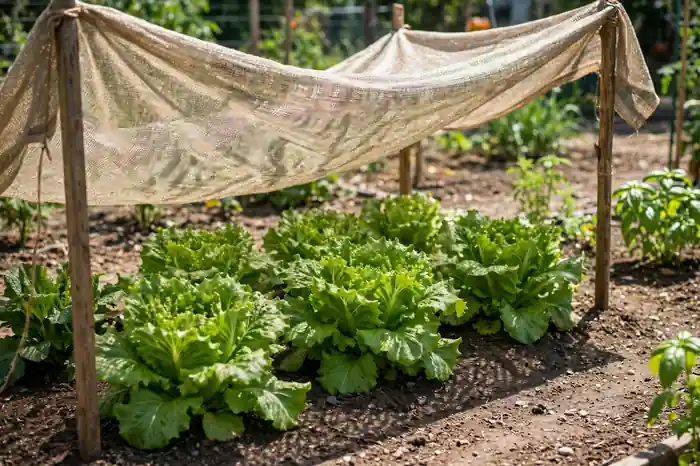
- Bolting and bitterness: harvest before heat arrives, pick the right type and keep soil cool.
- Tip burn: brown leaf edges. Keep watering even and give plants good airflow.
- Slugs and snails: clear debris, set traps and use an iron phosphate bait if needed.
- Aphids: rinse them off with water and look under leaves.
- Rabbits and birds: protect with a low fence or netting.
- Poor sprouting: hot soil, old seed or seeds planted too deep.
Do not confuse lettuce with other plants called lettuce
Water lettuce is a floating pond and aquarium plant, not a salad crop. Miner's lettuce is a different wild green that likes cool, moist conditions and can be grown from seed. Wild lettuce is another plant altogether and is not a garden vegetable.
How much does it cost to grow lettuce?
Very little. A seed packet often costs about $2 to $4 and sows many rows, and a pack of transplants costs a bit more. Add a pot or window box, potting mix and compost for a few dollars each. A grow light or hydroponic kit costs more, often from about $30 to over $100. These are rough 2026 estimates and vary by brand and size.
Quick answers to common questions
How long does lettuce take to grow?
About 4 to 7 weeks for leaf lettuce, 8 to 11 weeks for butterhead and romaine, and 10 to 14 weeks for iceberg. Baby leaves can be cut in 3 to 4 weeks.
Can you grow lettuce indoors?
Yes. Use a shallow tray, potting mix, a cool room and a grow light for 12 to 16 hours a day. Leaf and butterhead types do best.
Can you regrow lettuce from scraps?
A romaine stump in shallow water regrows a few small leaves in about two weeks, but not a full head.
What is the best month to plant lettuce?
Early spring, as soon as the soil can be worked, and late summer for fall. Choose by your climate: plant in the cool months.
Does lettuce grow better in pots or in the ground?
Both work. The ground needs less watering, and pots let you move lettuce out of heat and give you control over soil.
Keep reading: how to compost, how to grow strawberries, natural weed killer and more lawn and garden guides.
Is learning how to grow lettuce worth it?
Yes. Lettuce is fast, cheap and easy, and fresh leaves taste better than bagged ones. The keys to how to grow lettuce are cool weather, damp loose soil, steady water and a new planting every two weeks. Start with a pot of leaf lettuce and add more as you go.