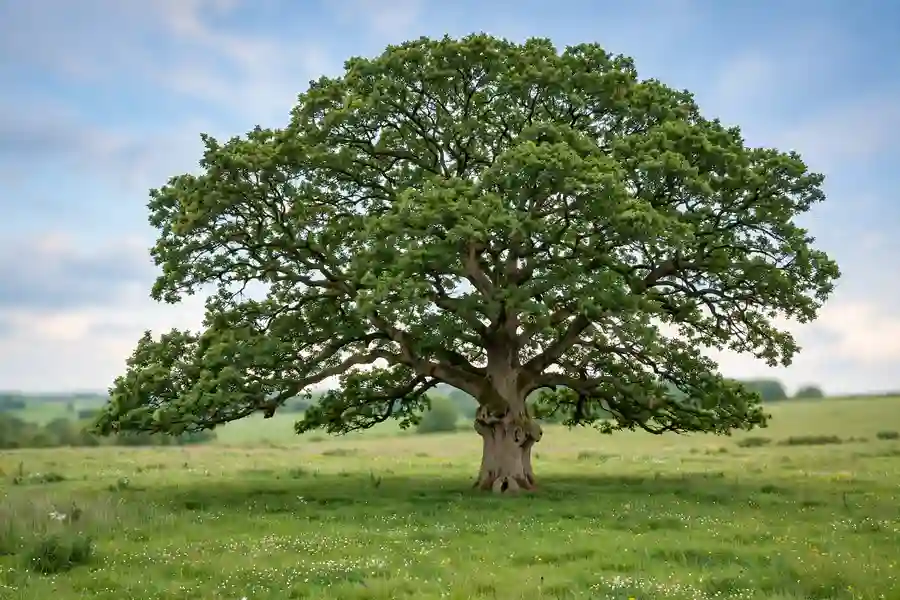
An oak tree is a long-lived hardwood in the genus Quercus, known for lobed or toothed leaves, acorns, deep roots and sturdy wood. There are about 500 species worldwide, in two main groups: white oaks (rounded leaf lobes, acorns mature in one year) and red oaks (pointed, bristle-tipped lobes, acorns take two years). Most oaks grow 40 to 100 feet tall, grow 1 to 2 feet a year, live 100 to 400 years or more and need full sun. Prune in the dormant season, because pruning in spring can spread oak wilt.
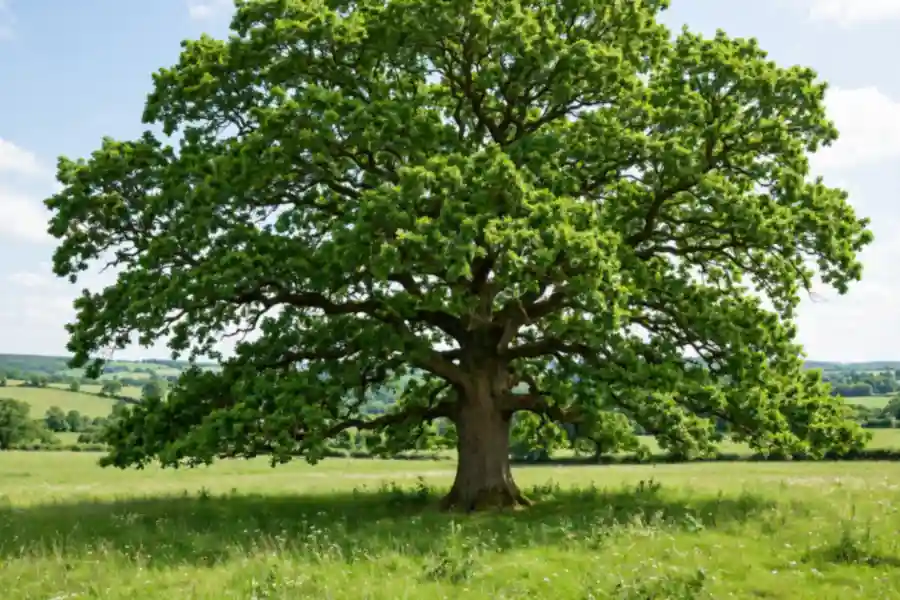
Oak tree at a glance
| Question | Answer |
|---|---|
| Scientific name | Quercus (beech family, Fagaceae) |
| Two main groups | White oaks and red oaks |
| Height | 40 to 100 ft, depending on species |
| Growth rate | Slow to moderate, about 1 to 2 ft a year. Pin, willow and Shumard are faster |
| Lifespan | 100 to 400 years or more. Short-lived: water oak (30 to 50 years) |
| Light | Full sun |
| Soil | Deep, well-drained. Pin oak prefers acidic soil |
| Fruit | Acorns, heavy crops every few years |
| Bloom | Wind-pollinated catkins in spring. Major pollen allergy source |
| Pruning | Dormant season, to avoid oak wilt |
| Biggest threats | Oak wilt, drought stress, root damage, defoliating caterpillars |
How do you tell a white oak from a red oak?
| Feature | White oak group | Red oak group |
|---|---|---|
| Leaf lobes | Rounded, no bristles | Pointed with bristle tips |
| Acorns | Mature in 1 year. Less bitter | Mature in 2 years. More bitter |
| Bark | Light gray, scaly or flaky | Darker, ridged and furrowed |
| Fall color | Brown to burgundy | Red to bronze |
| Wood | Tight pores, water resistant | Open pores, absorbs water |
| Examples | White, bur, swamp white, chestnut, post, live (white group) | Red, black, pin, scarlet, Shumard, willow, water, Nuttall |
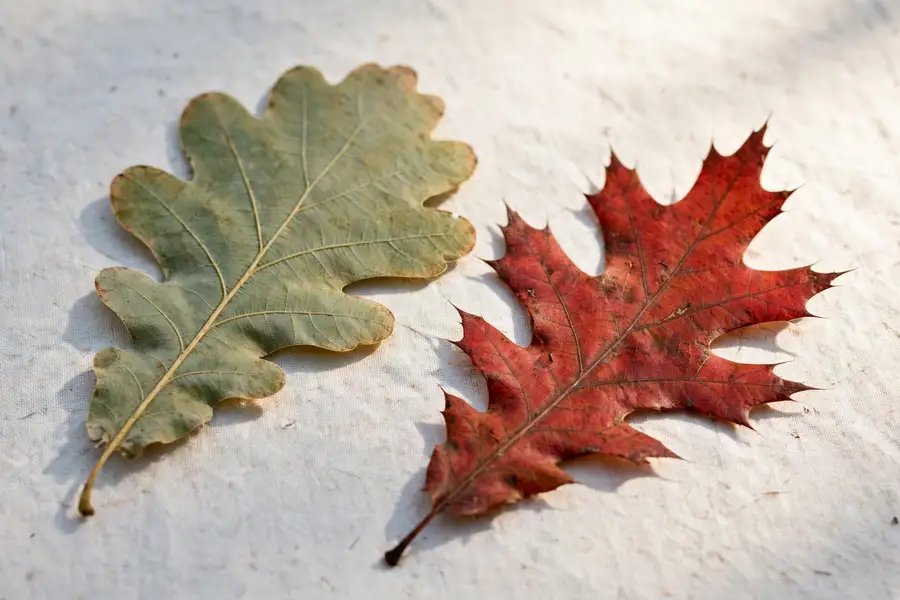
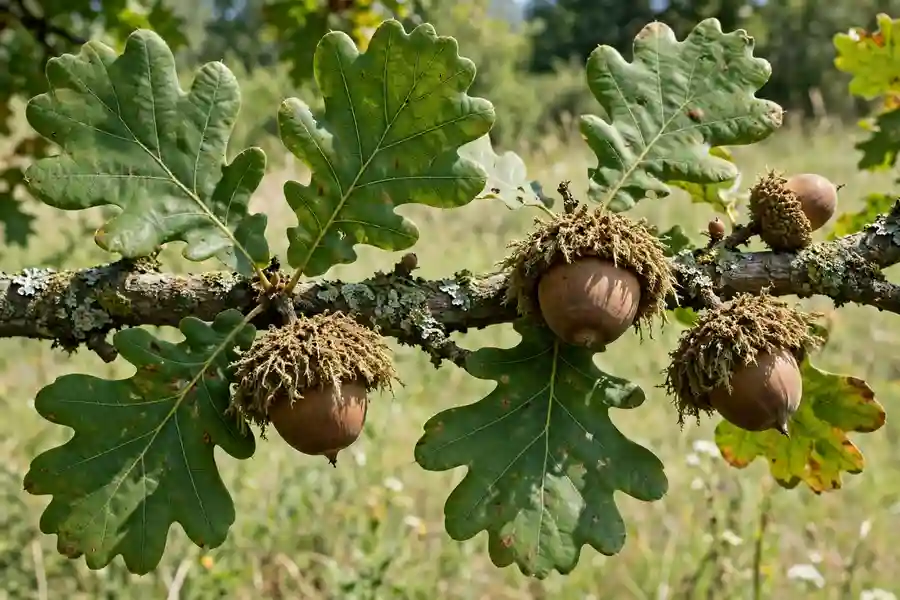
What does an oak tree look like? A broad, spreading crown on a thick trunk. Leaves grow alternately on twigs, buds cluster at the twig tips, and acorns with a cap form in fall.
What are the types of oak tree?
| Oak | Group | Height | Zones | Leaves and notes |
|---|---|---|---|---|
| White oak | White | 60 to 100 ft | 3 to 9 | Rounded lobes. Slow growing, long-lived, light gray bark |
| Swamp white oak | White | 50 to 60 ft | 3 to 8 | Wavy-edged leaves. Tolerates wet soil, easier to transplant |
| Bur (burr) oak | White | 70 to 80 ft | 3 to 8 | Giant acorns with fringed caps. Drought tolerant, can live 300 years or more |
| Chestnut oak | White | 50 to 70 ft | 4 to 8 | Wavy-toothed leaves like a chestnut. Deeply ridged bark |
| Post oak | White | 40 to 50 ft | 5 to 9 | Cross-shaped leaves. Dry soils |
| Chinkapin (chinquapin) oak | White | 40 to 60 ft | 5 to 7 | Toothed leaves. Likes alkaline soil |
| Overcup oak | White | 60 to 70 ft | 5 to 9 | Wet soils, acorn cap nearly covers the nut |
| English oak | White | 40 to 70 ft | 3 to 8 | Wavy lobes. Columnar cultivars exist |
| Northern red oak | Red | 60 to 75 ft | 3 to 8 | Pointed lobes, fast for an oak, red fall color |
| Black oak | Red | 50 to 80 ft | 3 to 9 | Dark bark, glossy leaves |
| Scarlet oak | Red | 60 to 70 ft | 4 to 9 | Deeply cut leaves, bright scarlet fall color |
| Pin oak | Red | 60 to 70 ft | 4 to 8 | Pyramidal, deeply lobed, drooping lower branches. Leaves yellow in alkaline soil |
| Shumard oak | Red | 50 to 80 ft | 5 to 9 | Drought tolerant, good fall color |
| Nuttall oak | Red | 60 to 70 ft | 5 to 9 | Similar to pin oak, fast, wet tolerant |
| Willow oak | Red | 40 to 75 ft | 5 to 9 | Narrow willow-like leaves, fast, fine texture |
| Water oak | Red | 50 to 80 ft | 6 to 9 | Spoon-shaped leaves. Fast but short-lived |
| Laurel oak | Red | 60 to 70 ft | 7 to 9 | Narrow, shiny, nearly evergreen leaves. Short-lived |
| Blackjack oak | Red | 20 to 50 ft | 6 to 9 | Broad leaves, poor dry soils |
| Southern red (Spanish) oak | Red | 60 to 80 ft | 7 to 9 | Variable lobed leaves |
| Sawtooth oak | Red | 40 to 60 ft | 5 to 9 | Chestnut-like leaves. Invasive in some areas |
| Shingle oak | Red | 40 to 60 ft | 5 to 8 | Unlobed, shiny leaves |
Zones and sizes vary by source and site. Check your plant tag.
Which oaks are evergreen?
| Oak | Notes |
|---|---|
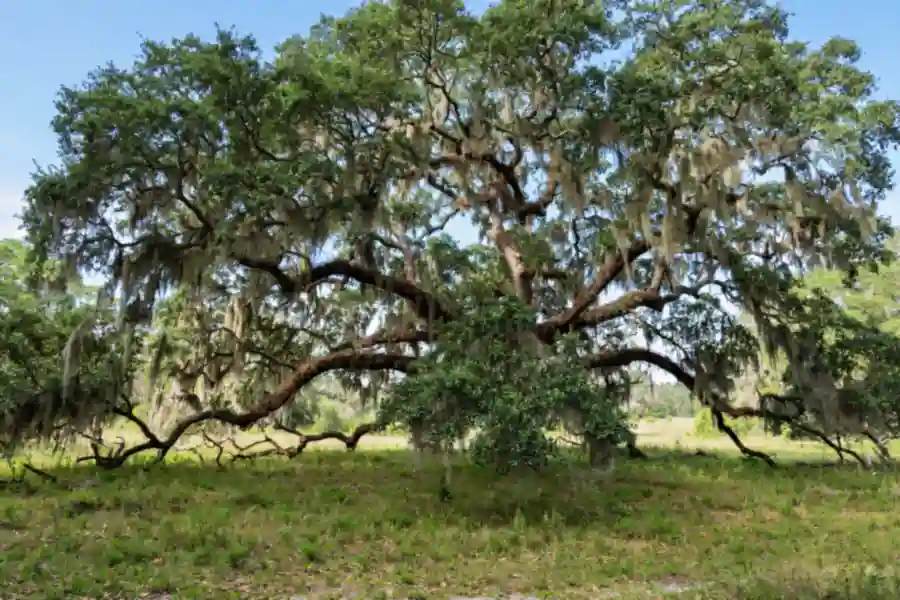
| Southern live oak (Quercus virginiana) | The classic evergreen oak of the Southeast. Zones 8 to 10. Wide spreading crown, often draped with Spanish moss. Sheds old leaves in spring as new ones emerge |
| Coast live oak (Quercus agrifolia) | California native with spiny, holly-like leaves |
| Holm (holly) oak (Quercus ilex) | Mediterranean evergreen. Dark, holly-like leaves |
| Cork oak (Quercus suber) | Mediterranean evergreen. Bark harvested for cork about every 9 years. Zones 7 to 10 |
| Laurel oak | Nearly evergreen in warm climates |
Which oaks grow where?
| Region | Common oaks |
|---|---|
| Southeast and Florida | Live, laurel, water, willow, Shumard, turkey, sand live |
| Texas | Live, Shumard, post, bur, Texas red, Monterrey (Mexican white) |
| California and West | Coast live, valley, blue, Garry (Oregon white), canyon live, Gambel (Rockies) |
| Northeast | Northern red, white, scarlet, pin, chestnut, black |
| Midwest | Bur, white, northern red, pin, swamp white, black |
| Europe and Asia | English, sessile, holm, cork, Japanese (Mizunara) |
Which oaks are small, columnar or ornamental?
- Small: scrub oak and bear oak (shrubby, 10 to 20 ft), dwarf chinkapin.
- Columnar (narrow): Regal Prince, Crimson Spire, Kindred Spirit (columnar English oak hybrids), good for tight spaces.
- Fall color: scarlet, Shumard and northern red oak.
- Fast shade: pin, willow, Nuttall, Shumard, northern red.
- Weeping oak cultivars exist but are uncommon.
- Bonsai oak: oaks make good bonsai from acorn seedlings. Use a deep pot and prune the taproot and branches.
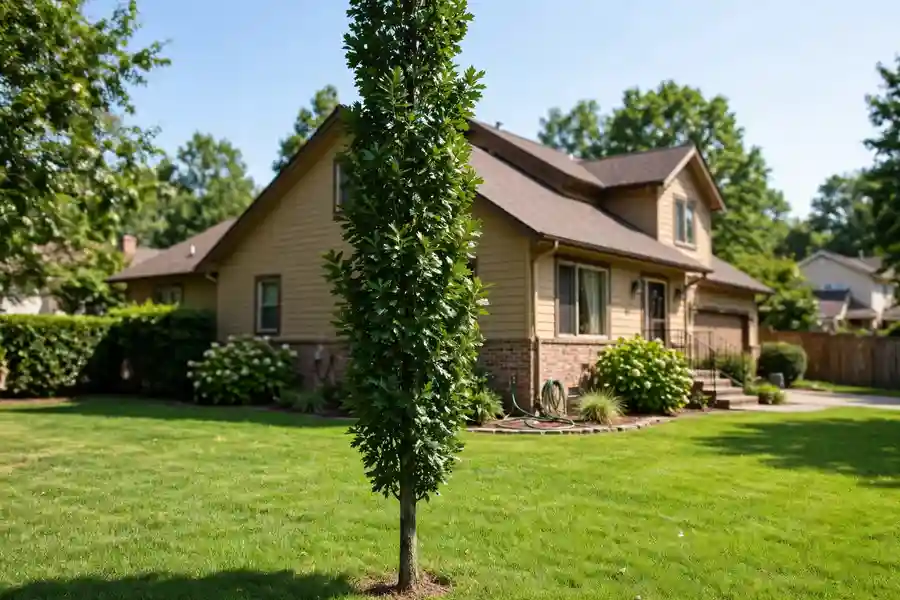
Pros and cons of common garden oaks:
| Oak | Pros | Cons |
|---|---|---|
| Pin oak | Fast, pyramidal, tolerates wet | Yellows in alkaline soil, drooping lower limbs |
| Willow oak | Fast, fine texture, tidy | Shallow roots in poor soil, acorns |
| Swamp white oak | Tough, wet tolerant | Slower, wavy leaves less showy |
| Bur oak | Huge, drought tolerant, long-lived | Slow, big acorns |
| Red oak | Fast, fall color | Susceptible to oak wilt |
| Live oak | Evergreen, majestic | Needs lots of room, messy leaves |
Plants called oak that are not oaks
| Plant | What it is |
|---|---|
| Poison oak | A shrub or vine (Toxicodendron) with oak-like leaves that causes an itchy rash. Not a tree |
| Silky oak, silver oak | Grevillea robusta, a tree in another family |
| She-oak | Casuarina, an unrelated tree |
| Tanoak | Notholithocarpus, related but a separate genus |
| Oakleaf hydrangea, oakleaf holly | Shrubs with oak-shaped leaves |
How big does an oak tree get and how fast does it grow?
- Height: typically 50 to 80 ft, some species over 100 ft. Spread is often as wide as the height, and live oaks spread wider than they are tall.
- Growth rate: most grow 1 to 2 feet a year when young. White oak is slower, while pin, willow, Shumard and northern red oaks are among the faster ones.
- Size by age (rough guide): a 5-year-old oak is often 5 to 10 ft, a 10-year-old 10 to 20 ft, and a tree may take 20 to 50 years to be a mature shade tree.
- Acorns: trees usually begin producing acorns at 20 to 50 years old.
How long do oak trees live?
| Oak | Typical lifespan |
|---|---|
| Water oak, laurel oak | 30 to 80 years |
| Pin oak | 80 to 120 years |
| Red oak, willow oak | 100 to 200 years |
| White oak, live oak | 200 to 400 years or more |
| Bur oak | 300 to 400 years or more |
The oldest known oaks are claimed to be 1,000 years old or more, though ages of very old trees are estimates.
What are the most famous oak trees?
- Angel Oak (Johns Island near Charleston, SC): a southern live oak, about 65 ft tall with a crown that spreads roughly 160 to 180 ft. Age estimates range from about 400 to 500 years and higher, and the City of Charleston maintains it. Check the city for visiting hours.
- Major Oak (Sherwood Forest, England): an English oak linked to Robin Hood, estimated at 800 to 1,000 years old.
- Charter Oak (Hartford, Connecticut): a white oak said to have hidden the colony's charter. It fell in 1856.
- Treaty Oak (Austin, Texas): a live oak that survived a poisoning in 1989.
- Wye Oak (Maryland): a white oak that fell in 2002.
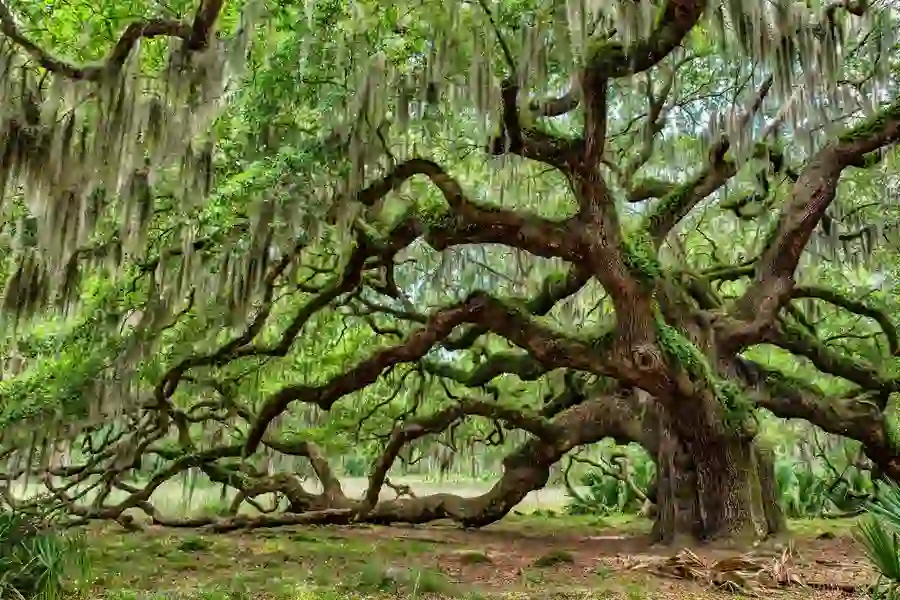
What do oak tree acorns, flowers and fruit look like?
- Acorn: the oak's fruit, a nut in a scaly cap. White oak acorns are sweeter. Red oak acorns are more bitter.
- Flowers (catkins): long, dangling tassels of tiny male flowers in spring. Female flowers are tiny and unnoticed.
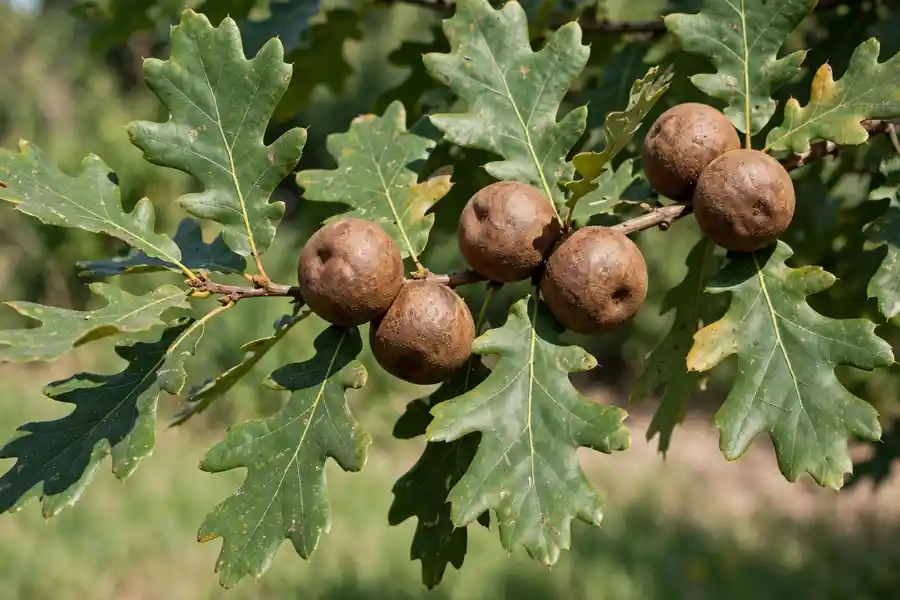
- Oak apples and brown balls: these are galls.
- Helicopter seeds do not come from oaks. Those are maple seeds.
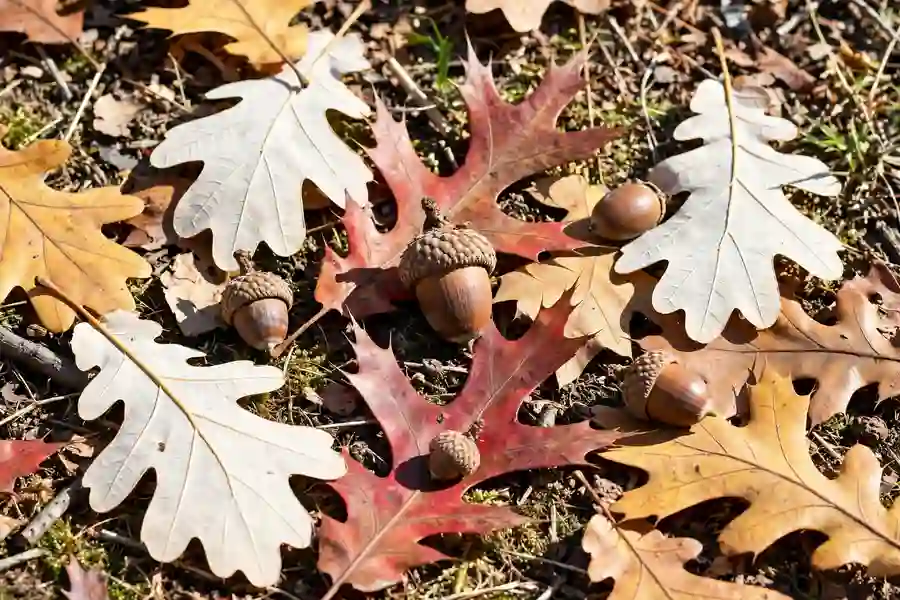
Can you eat acorns? Yes, after leaching out the bitter tannins. Raw acorns are bitter and can upset your stomach. To leach, shell and grind or chop them, then soak in cold water for days with changes, or boil in changed water until it runs clear. White oak acorns need the least. Acorns and pets: acorns can cause stomach upset or blockage in dogs, and horses and livestock can be poisoned by large amounts. Call your vet if a pet eats several.
How do you identify an oak tree by its leaves?
| Leaf shape | Likely oak |
|---|---|
| Rounded lobes | White oak, swamp white, bur, English |
| Pointed lobes with bristles | Red, black, scarlet, pin, Shumard |
| Deep rounded lobes with a cross shape | Post oak |
| Wavy-toothed edges | Chestnut oak, chinkapin |
| Narrow, willow-like | Willow oak |
| Spoon-shaped | Water oak |
| Oval, leathery, evergreen | Live oak |
| Spiny, holly-like | Coast live oak, holm oak |
- Leaves in fall: white oaks turn brown or burgundy, red oaks red or bronze, and many hold dead leaves through winter.
- Bark: white oak is light gray and scaly, red oak has dark ridges, black oak is almost black and blocky.
- Oak vs maple: oak leaves are alternate and rounded or lobed with acorns. Maple leaves are opposite and palm-shaped, with winged seeds.
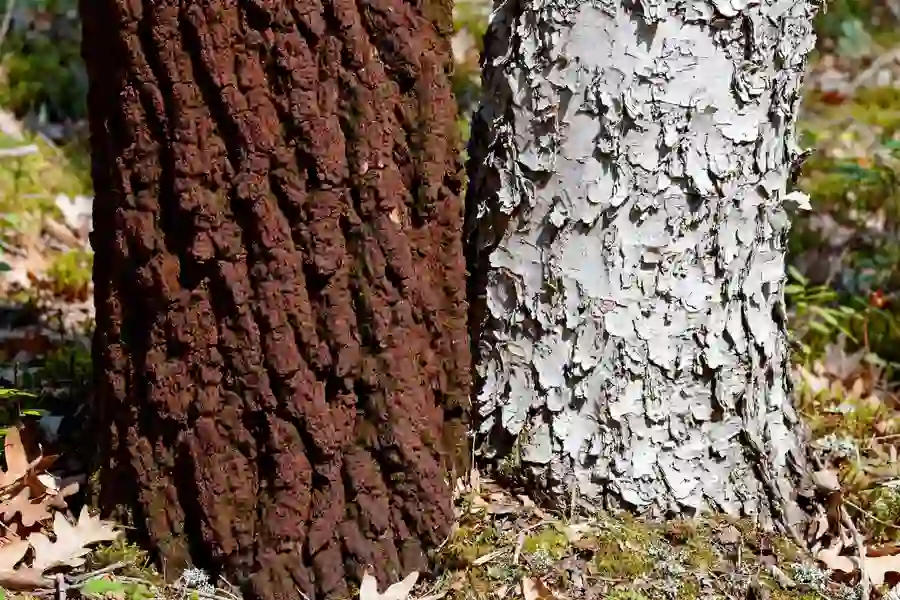
What do oak tree roots look like?
Young oaks develop a deep taproot, then spread wide lateral roots, usually two to three times the crown width. Most feeding roots sit in the top 1 to 2 feet of soil, so soil compaction, trenching or piling soil over them harms the tree. Roots can lift paving. Plant large oaks 30 feet or more from buildings and avoid grade changes near the trunk.
How do you plant and grow an oak tree?
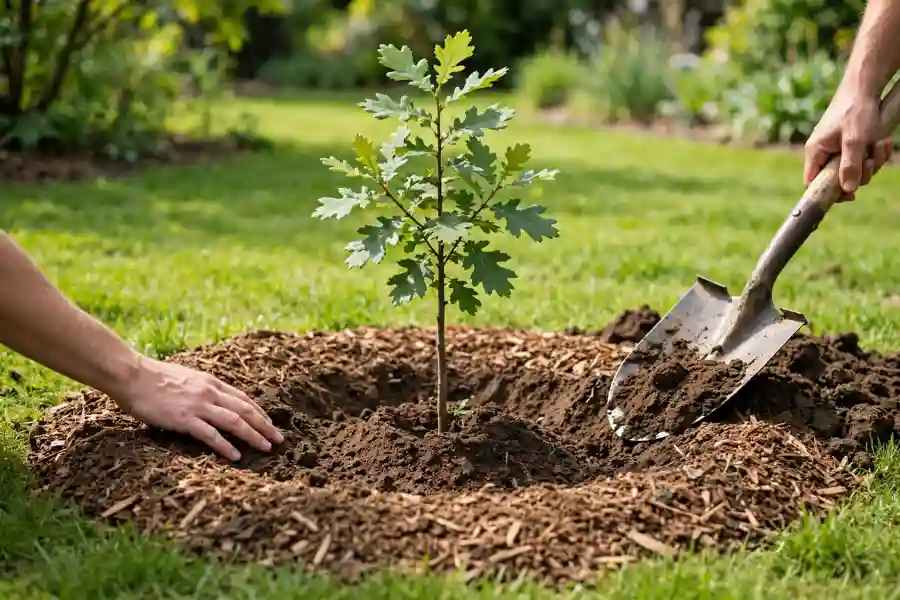
From a sapling:
- Plant in fall or early spring, in full sun and deep, well-drained soil. Allow a lot of room.
- Dig a hole 2 to 3 times as wide as the root ball and no deeper.
- Set the root flare level with the soil and backfill.
- Mulch 2 to 4 inches, kept away from the trunk.
- Water deeply once a week for 2 to 3 years.
From an acorn:
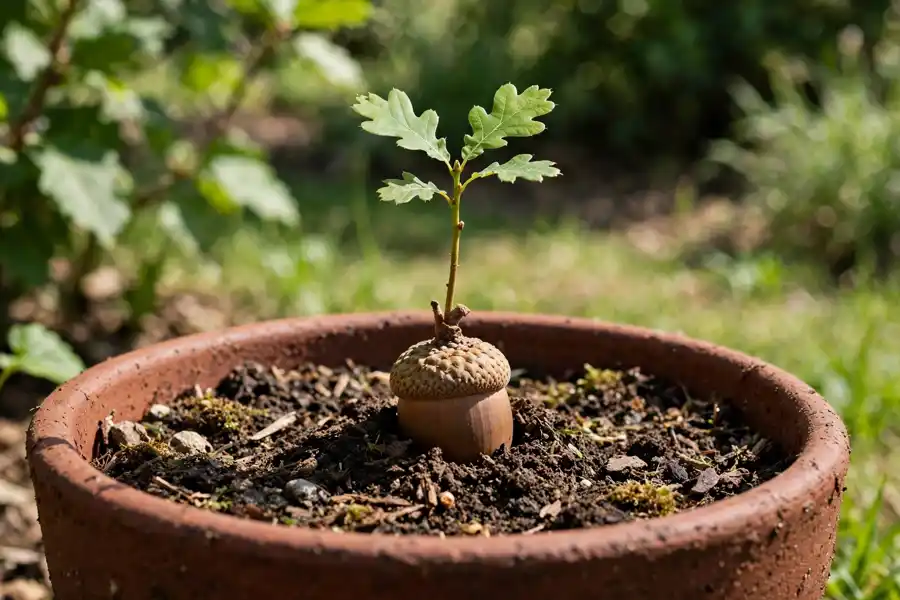
- Collect fresh acorns in fall. Discard those that float, have holes or caps stuck on.
- White oak acorns sprout right away in fall. Plant them 1 inch deep outdoors, protected from squirrels.
- Red oak acorns need cold: keep them in a bag of damp peat in the fridge for 30 to 90 days, then plant in spring.
- Use a deep pot, because of the taproot.
- Transplant seedlings to their final spot when small, at 1 to 3 years old. Mature oaks are very hard to move.
Fertilizer: feed only if a soil test shows a need. Use a slow-release tree fertilizer in spring, away from the trunk. Never overfeed.
Care: mulch, water in drought, keep mowers and string trimmers away, and avoid cutting roots.
When and how do you prune an oak tree?
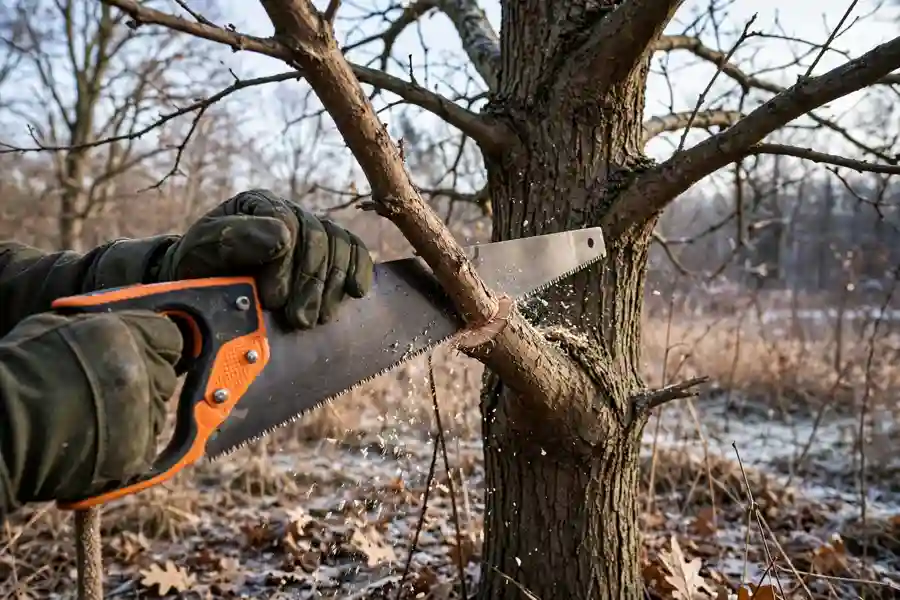
Prune in winter, while the tree is dormant. In regions with oak wilt, avoid pruning or wounding oaks from April through July, and some agencies advise waiting until after October 1. Wounds made in the spring attract beetles that carry the fungus. Dead or storm-damaged limbs that are a hazard can be cut at any time, then treat the wound promptly.
How:
- Remove dead, diseased and crossing branches first.
- Cut just outside the branch collar.
- Use the three-cut method for large limbs to avoid tearing bark.
- Take no more than about a quarter of the crown in a year.
- Never top an oak.
- Do not rely on wound paint, which is not recommended.
Live oak: same rules. Raise the crown gradually over years. Can you kill an oak by trimming? Yes, by topping, heavy pruning or pruning at the wrong time. Local rules may protect large or heritage oaks, so check before cutting. For large limbs, hire a certified arborist.
What are the common oak tree diseases and pests?
| Problem | Signs | What to do |
|---|---|---|
| Oak wilt | Leaves brown and drop in summer, red oaks die in weeks | Call an arborist fast. Do not prune in spring. Do not move firewood |
| Anthracnose | Spring leaf spots in cool, wet weather | Rake leaves. Usually minor |
| Powdery mildew | White coating on leaves in late summer | Usually harmless |
| Bacterial leaf scorch | Brown leaf edges with a yellow halo | No cure. Keep the tree watered |
| Leaf scorch | Brown leaves in summer from drought | Water deeply |
| Hypoxylon canker, root rot, shelf fungus | Crusty bark, mushrooms at the base, thinning | Often a sign of a stressed or declining tree. Call an arborist |
| Galls (oak apples, brown balls) | Round growths on leaves or twigs | Mostly harmless |
| Oak itch mites | Itchy bites in late summer from tiny mites in leaf galls | Harmless to the tree |
| Caterpillars | Chewed leaves, droppings (frass) | Spongy moth and others can strip a tree. A healthy tree usually recovers |
| Slime flux | Foul-smelling sap oozing from wounds | Usually minor |
| Sudden oak death | Bleeding cankers in California and Oregon | Report to local authorities |
Why are my oak leaves turning brown? Drought, heat, anthracnose, bacterial scorch and oak wilt are common causes. Fall browning is normal in white oaks. Bark falling off: can be normal shedding, or from lightning, frost cracks or disease. A dead or dying oak: check for bare branches, mushrooms at the base and peeling bark. A large dead tree is a hazard, so call a certified arborist. To remove an unwanted oak: cut it and treat the stump with a herbicide labeled for stumps, or grind it.
Oak tree pollen allergy
Oaks release large amounts of pollen from catkins in spring, often March to May. Symptoms are sneezing, runny nose and itchy eyes. Tips: keep windows closed on high-pollen days, shower after being outside and check pollen forecasts. Some people with oak or birch pollen allergies react to raw apples, pears, cherries, hazelnuts, carrots or celery. This is called oral allergy syndrome.
What is oak wood used for?
| Wood | Traits | Uses |
|---|---|---|
| White oak | Dense, water resistant | Barrels, boats, outdoor furniture, flooring |
| Red oak | Open grain, absorbs stain | Indoor furniture, cabinets, flooring |
Both are hardwoods.
What does an oak tree mean?
The oak stands for strength, endurance, wisdom and longevity. It was sacred to ancient Greek, Roman, Norse and Celtic cultures. In the US, the oak was named the national tree in 2004. State trees include live oak (Georgia) and white oak (Connecticut, Illinois, Maryland). The proverb "mighty oaks from little acorns grow" means great things start small. Oaks appear in several Bible passages as landmarks and burial places, and translations vary between oak and terebinth.
Quick answers to common questions
What are the main types of oak tree?
White oaks, red oaks and evergreen live oaks. Common species include white, red, live, pin, bur, willow, Shumard, post and chestnut oaks.
How fast do oak trees grow?
About 1 to 2 feet a year. Pin, willow and Shumard oaks are faster. White oak is slower.
How long do oak trees live?
100 to 400 years or more. Water and laurel oaks live 30 to 80 years.
When should you prune an oak tree?
In winter while dormant. In oak wilt areas, avoid April through July.
How do you tell a white oak from a red oak?
White oaks have rounded leaf lobes and light, scaly bark. Red oaks have pointed, bristle-tipped lobes and darker, ridged bark.
Keep reading: magnolia tree, how to prune roses, how to compost and more lawn and garden guides.
Is an oak tree worth planting?
Yes, if you have room. An oak tree gives shade, wildlife food and a landmark that can outlive you. Choose a species suited to your zone and soil, give it space, protect the roots and prune only in winter.