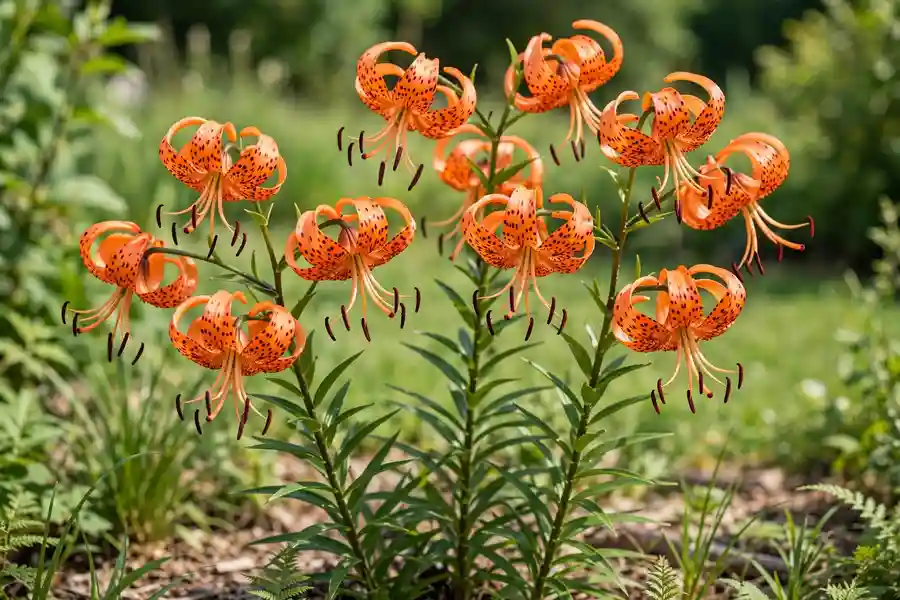
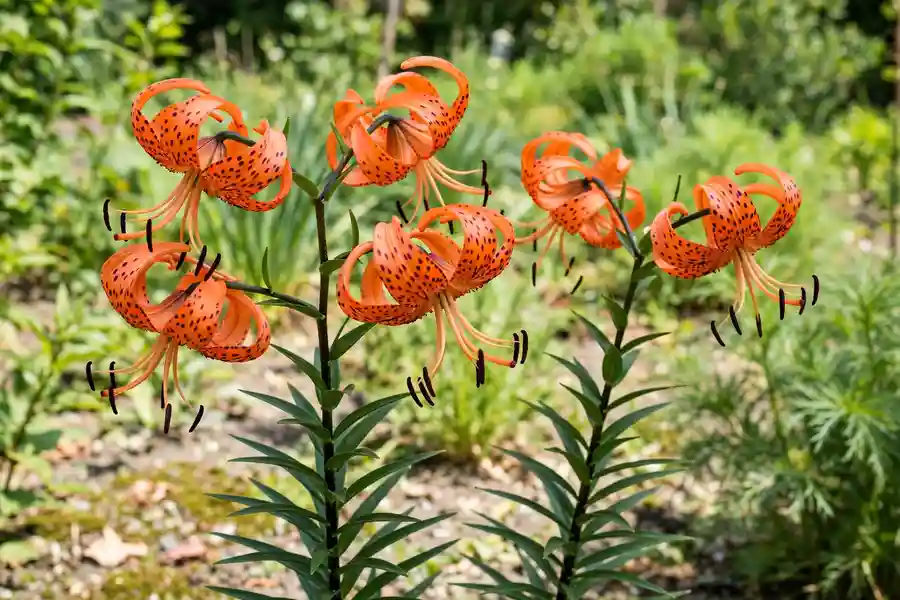
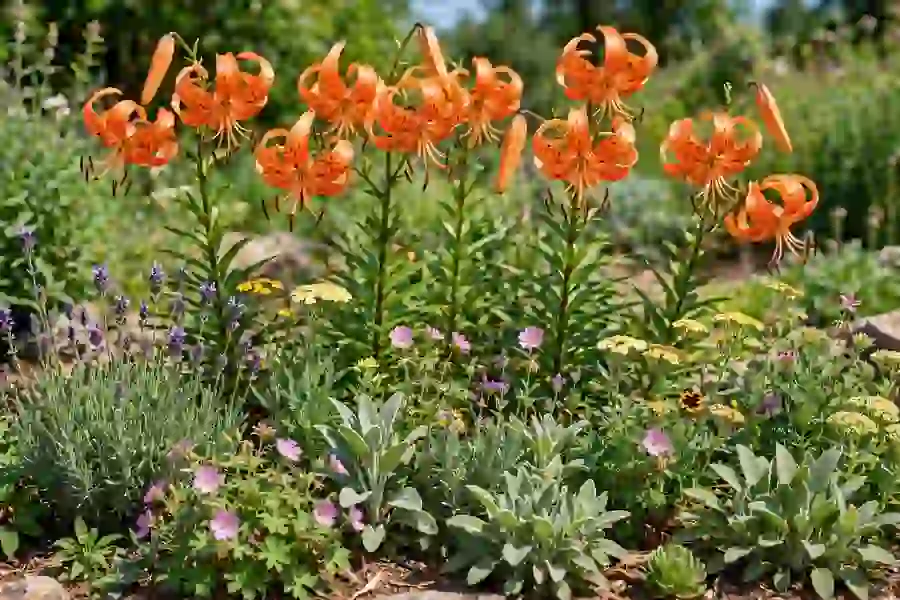
The tiger lily (Lilium lancifolium) is a tall summer-blooming bulb with nodding orange flowers, curled-back petals and dark purple-black spots. It grows 3 to 5 feet tall, is hardy in about zones 3 to 9, blooms in July and August and makes small black bulbils in the leaf joints, which is how it spreads. It is a true lily, so it is highly toxic to cats. Plant bulbs in fall in full sun and well-drained soil.
Tiger lily at a glance
| Question | Answer |
|---|---|
| Scientific name | Lilium lancifolium (also called Lilium tigrinum) |
| Native to | China, Japan and Korea. Naturalized in parts of eastern North America |
| Flower | Orange with dark spots, petals curled back, 4 to 5 inches wide, nodding |
| Height | 3 to 5 ft |
| Bloom | July to August, about 2 to 3 weeks per stem |
| Hardiness | About zones 3 to 9 |
| Light | Full sun to light shade |
| Soil | Well-drained. Bulbs rot in wet soil |
| Plant | Bulbs in fall or early spring, about 6 inches deep |
| Spreads by | Bulbils in the leaf joints and offset bulbs. It makes no viable seed |
| Cats | Highly toxic. Can cause fatal kidney failure |
What does a tiger lily look like?
- Flowers: 5 to 20 or more per stalk. Bright orange petals with dark purple-black spots and long, protruding stamens with dark anthers. The petals curl backward (a "Turk's cap" shape).
- Leaves: narrow, dark green and lance-shaped, arranged along the stem.
- Bulbils: small, dark purple-black bulblets that form where the leaves meet the stem. This is the clearest way to tell a tiger lily from other lilies.
- Stem: tall, dark and slightly woolly.
- Bulb: a scaly, yellowish-white bulb, 2 to 4 inches wide, with no papery skin.
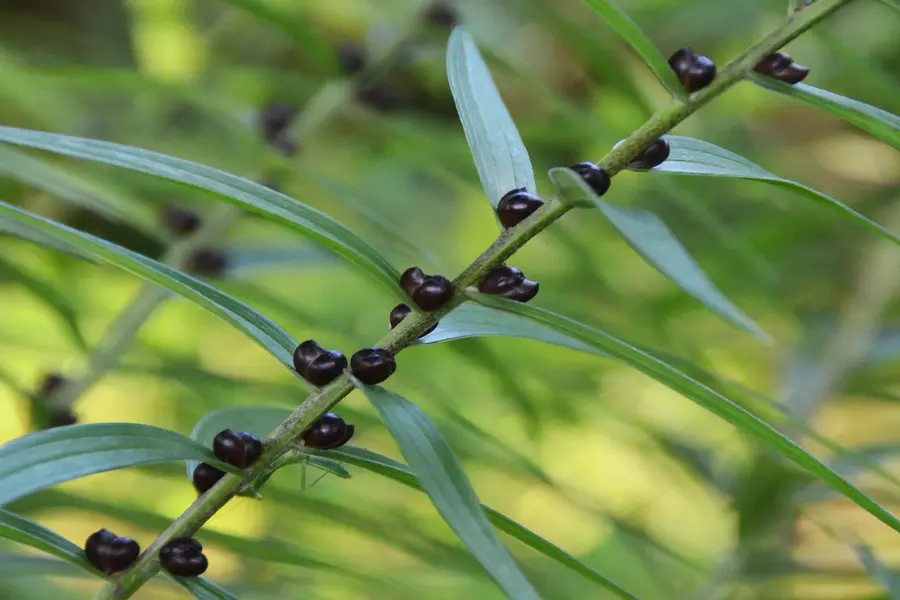
What is a tiger lily? A true lily (genus Lilium), and one of the oldest cultivated lilies. Its bulbs have been grown for food and decoration in East Asia for centuries.
What colors do tiger lilies come in?
| Color | What it is |
|---|---|
| Orange with dark spots | The true, classic tiger lily |
| Yellow | The yellow-flowered variety (var. flaviflorum), also spotted |
| Double orange | 'Flore Pleno', a double form |
| Pink, white, red, purple | Spotted Asiatic or Oriental hybrids sold as "tiger" lilies, not the species |
| Blue | Not real. There is no blue lily. Photos are edited |
| Black | Not real. Very dark red or purple hybrids look black in low light |
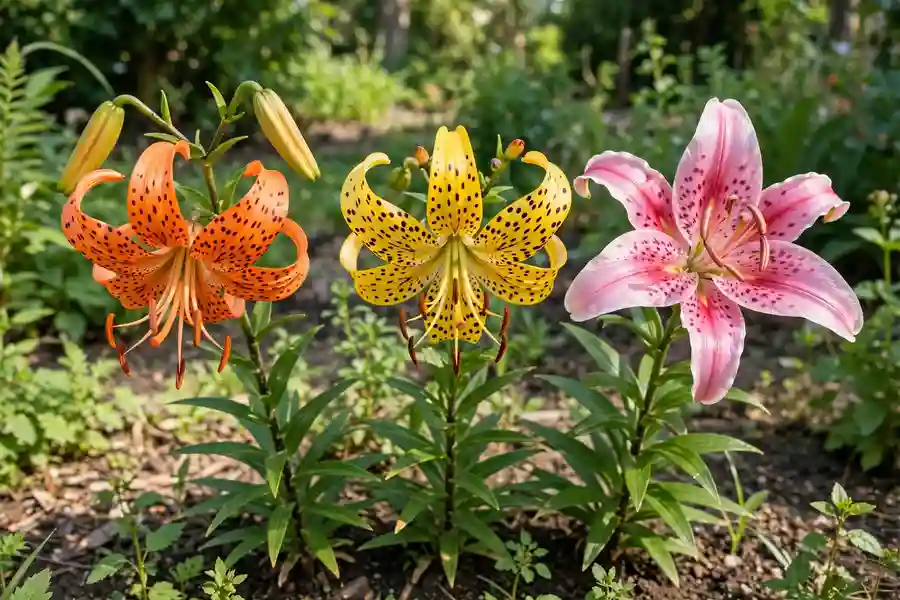
Real purple or blue tiger lily? No. Lilies do not make true blue pigment. Tiger lily without spots is not a tiger lily. A spotless orange lily is usually an Asiatic hybrid or a daylily.
Tiger lily vs daylily vs other orange lilies
| Feature | Tiger lily | Daylily (ditch lily) | Asiatic lily | Stargazer lily |
|---|---|---|---|---|
| Plant type | True lily from a bulb | Not a true lily. Fleshy roots | True lily | True lily |
| Spots | Yes, dark | No (usually) | Often none or few | Yes, but upward-facing, pink |
| Petals | Curled back | Open and flat | Open, upward or outward | Open, upward |
| Leaves | Along the stem | Arching clump from the base | Along the stem | Along the stem |
| Bulbils | Yes | No | No | No |
| Bloom | July to August | June to August, one day each | Early summer | Mid to late summer |
| Scent | Light | Light | Little | Strong |
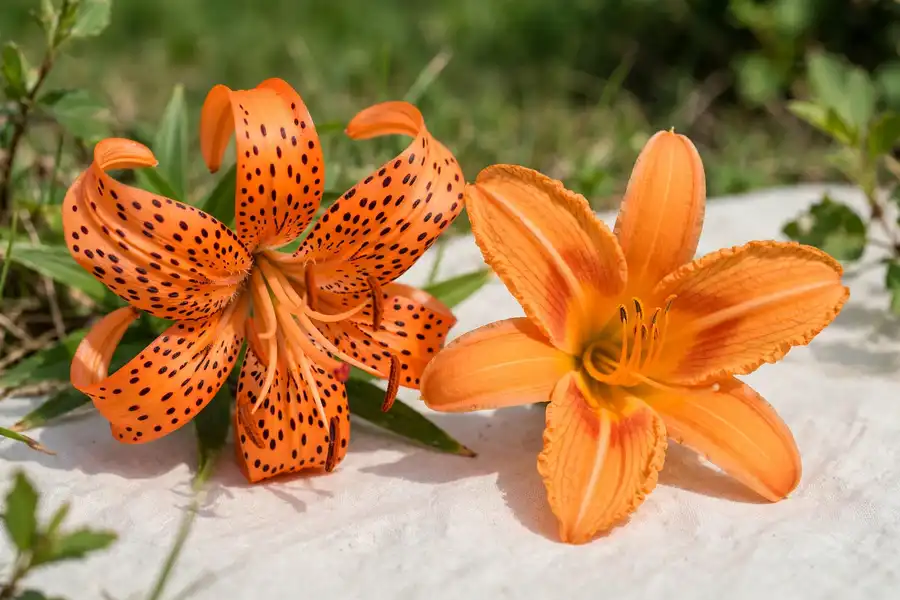
Ditch lily is the common name for the orange daylily that grows along roadsides. It looks like a tiger lily from a distance but has no spots or bulbils. Wild tiger lily in North America can mean the naturalized Asian tiger lily or native Turk's cap and Columbia lilies. Tiger canna lily (Canna 'Bengal Tiger') is a canna with striped leaves, not a lily. Tiger lotus is an aquarium plant, and no tiger lily grows underwater.
When do tiger lilies bloom?
July to August, usually mid to late summer. Each stalk blooms for 2 to 3 weeks, and each flower lasts about a week. A new bulb may take a year or two to bloom. Tiger lilies bloom after Asiatic lilies and before most Orientals.
How do you plant tiger lily bulbs?
When: fall is best, 4 to 6 weeks before the ground freezes. Early spring works too.
How:
- Choose a sunny spot with at least 6 hours of sun and well-drained soil. They like "heads in the sun, feet in the shade," so plant low plants in front.
- Dig a hole about 6 inches deep (about three times the bulb height). Plant with the pointed end up.
- Space bulbs 8 to 12 inches apart.
- Water well, then mulch 2 to 3 inches.
- Mark the spot.
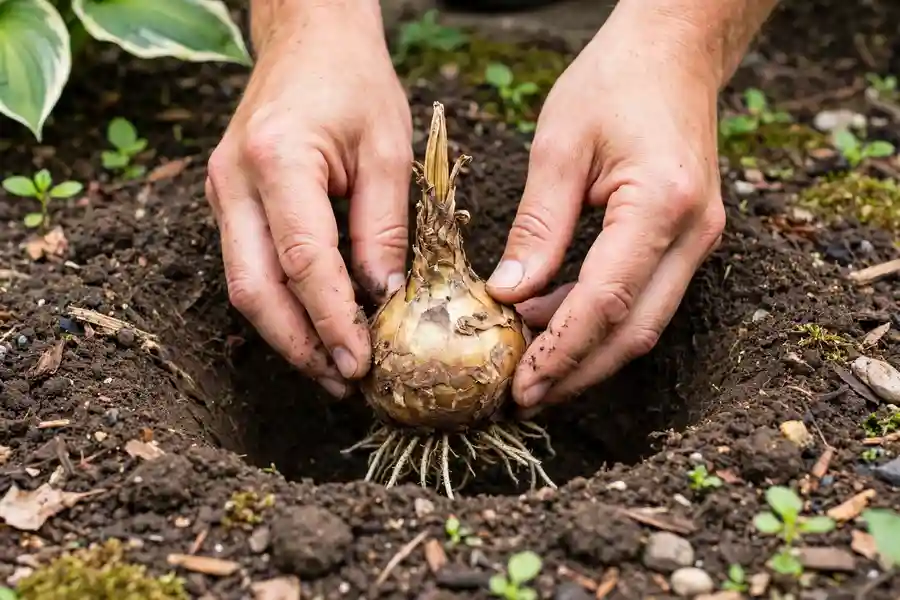
For general lily planting details, see our lily flower guide.
How do you care for tiger lilies?
- Water: about 1 inch a week during growth and bloom. Do not let the soil stay wet.
- Fertilizer: a balanced fertilizer when shoots emerge in spring.
- Support: stake tall stems in windy spots.
- After bloom: remove spent flowers. Leave the stem and leaves until they turn yellow, then cut them down.
- Divide crowded clumps every 3 to 4 years in fall.
- Pots: use a deep pot with drainage and a gritty potting mix.
- Pests: the red lily leaf beetle, aphids and gray mold in wet weather. Deer and rabbits like the buds.
How do you grow tiger lilies from bulbils?
Tiger lilies are sterile (triploid), so they do not make viable seeds. Propagate with bulbils or bulbs.
- In late summer, when the bulbils turn black and loosen easily, pick them off the stem.
- Plant them about 1 inch deep in a pot or nursery bed, 2 to 3 inches apart.
- Keep the soil moist. Mulch for winter.
- Move them to their final spot when they are larger.
- Expect flowers in 2 to 3 years.

You can also dig and separate offset bulbs in fall.
Are tiger lilies invasive?
They spread by bulbils and have naturalized along roadsides and woodland edges in parts of eastern North America. They are not usually aggressive in a bed, but they can carry lily mosaic virus without showing symptoms, which can harm other lilies planted nearby. If you grow fancy hybrid lilies, keep tiger lilies away from them.
Are tiger lilies toxic to cats and dogs?
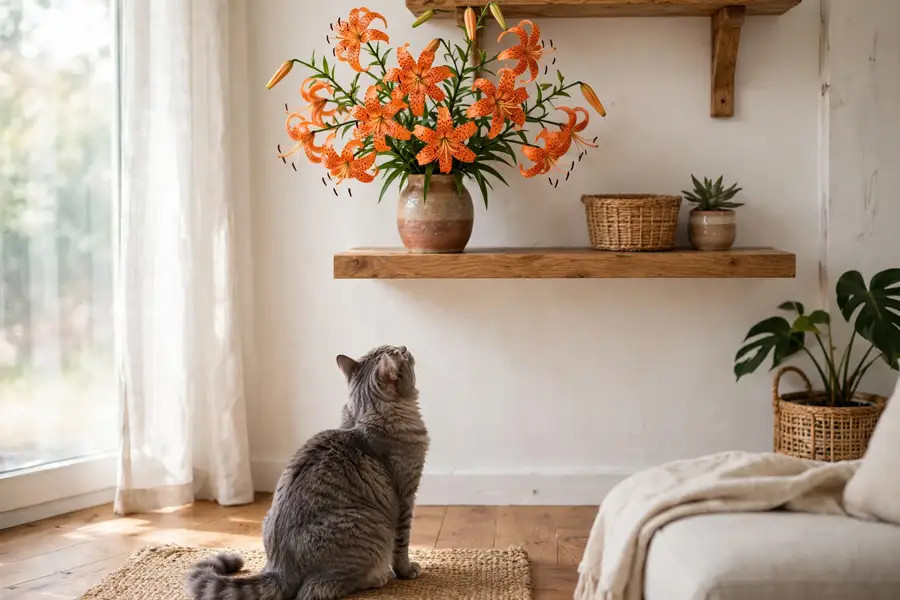
Yes, to cats. All true lilies, including the tiger lily, can cause acute kidney failure in cats, even from a small bite, pollen or vase water. Treat any exposure as an emergency and call a vet or the ASPCA Animal Poison Control Center at 888-426-4435 (a fee may apply). Dogs usually get only mild stomach upset. Our lily flower guide has the full cat-safety details.
Are tiger lilies edible?
The bulbs of tiger lilies and some other lilies are cooked and eaten in parts of East Asia, and the buds and flowers are used in some dishes. Do not forage or eat garden plants unless you are sure of the species and they are untreated. Keep them away from cats.
What does the tiger lily mean?
The tiger lily stands for pride, confidence, passion and wealth, from its bold color and spots. In some Asian traditions, lily bulbs are linked to harmony and a happy marriage. These meanings are traditions and vary. It is not an official birth flower. A tiger lily tattoo usually follows the same meanings.
Quick answers to common questions
What does a tiger lily look like?
An orange flower with dark spots and curled-back petals on a 3 to 5 foot stem, with small black bulbils at the leaf joints.
What is the difference between a tiger lily and a daylily?
A tiger lily is a bulb with spots, curled petals and bulbils. A daylily has no spots, arching leaves from the base and flowers that last a day.
When do tiger lilies bloom?
July to August, for 2 to 3 weeks.
Are tiger lilies toxic to cats and dogs?
Highly toxic to cats (kidney failure). Mild stomach upset in dogs.
How do you grow tiger lilies from bulbils?
Pick black bulbils in late summer, plant them 1 inch deep and wait 2 to 3 years for flowers.
Keep reading: lily flower, spider lily, how to plant tulip bulbs and more lawn and garden guides.
Should you grow a tiger lily?
Yes, if you have no cats and want a tough, tall summer lily. A tiger lily needs little care, multiplies on its own and flowers reliably when planted in sun with good drainage.