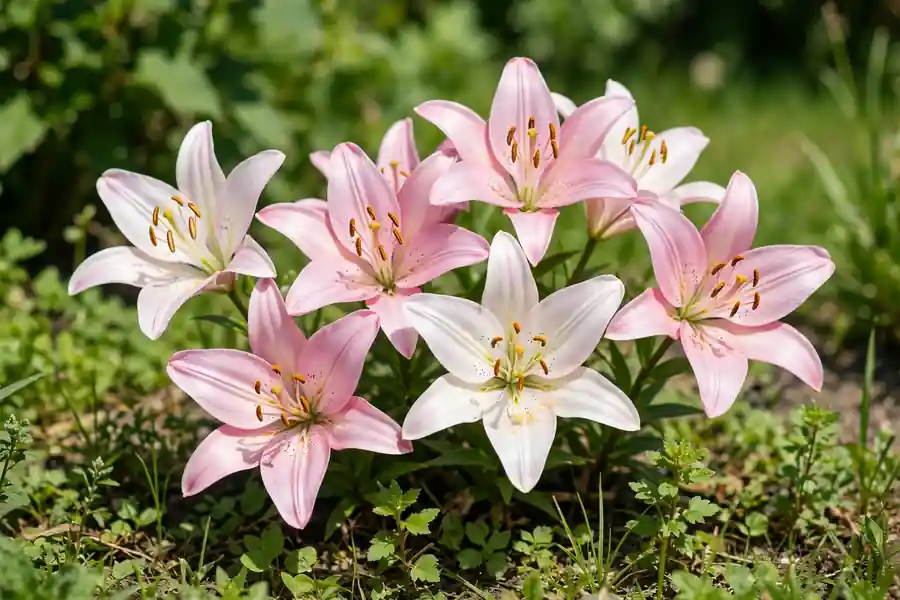
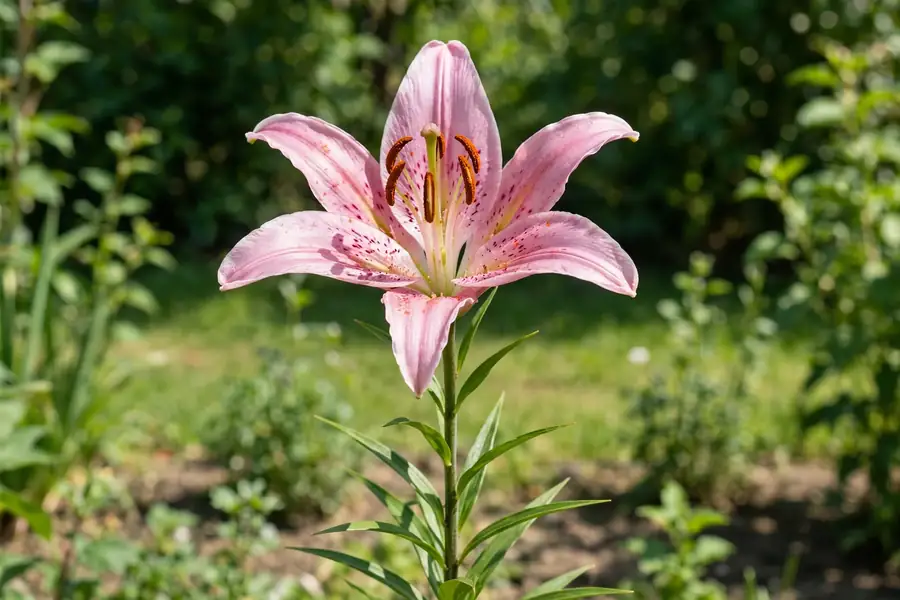
A lily flower is the large, showy, usually trumpet-shaped bloom of a plant in the genus Lilium, a group of bulb plants that grow from underground scaly bulbs and flower in summer in white, pink, yellow, orange, red and purple. True lilies have six petal-like segments, six stamens and a single central pistil. They are hardy in many parts of the US, grow best in full sun with well-drained soil and stand for purity, renewal and devotion. They are also deadly to cats, even in tiny amounts.
The word "lily" is used for many plants that are not true lilies, such as calla lilies, peace lilies, daylilies, water lilies and lily of the valley. That is why searches for "lily flower" lead in so many directions. This guide covers what a real lily is, the main types, colors, how to tell lookalikes apart, what lilies mean, the lily birth flowers, how to grow and care for lilies and which lilies are dangerous to pets.
Lily flower at a glance
| Question | Short answer |
|---|---|
| Scientific name | Lilium (the true lilies) |
| Grows from | A scaly underground bulb |
| Flower shape | Trumpet, bowl, star or turban-shaped, with six petal-like segments |
| Colors | White, pink, yellow, orange, red, purple and bicolor. No true blue |
| Bloom time | Early to late summer, depending on the type |
| Light | Full sun, about 6 hours or more |
| Soil | Well-drained. Bulbs rot in wet soil |
| Hardiness | Roughly zones 4 to 8 or 9, depending on the type |
| Planting time | Fall or early spring |
| Fragrance | Strong in Oriental, trumpet and Easter lilies. Little in Asiatics |
| Cat safety | True lilies are highly toxic to cats. Even pollen or vase water can cause kidney failure |
| Meaning | Purity, renewal, devotion, and in some cultures, sympathy |
What is a lily flower?
A lily flower is the bloom of a true lily, a plant in the genus Lilium in the lily family (Liliaceae). There are around 100 species, mostly native to the cooler parts of the Northern Hemisphere, including North America, Europe and Asia. Gardeners grow them from bulbs, and thousands of hybrids exist.
What does a lily flower look like?
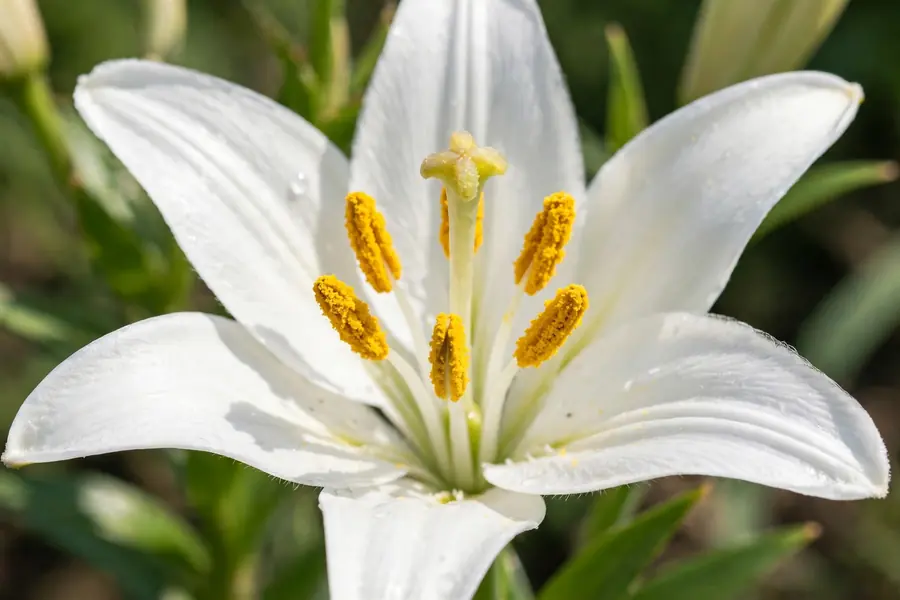
- Six petal-like segments called tepals. Three are true petals and three are sepals, but they look alike.
- Six long stamens with large, pollen-covered anthers that can stain skin, clothes and petals.
- One central pistil with a sticky three-lobed stigma at the tip. This is the female part.
- A tall, upright stem with narrow leaves arranged along it. The flowers sit at the top, one to a dozen or more per stem.
- A scaly bulb with no papery outer skin, which means it dries out and rots more easily than a tulip or daffodil bulb.
The plural of lily is lilies. In Spanish, lily is lirio and white lilies are often called azucenas.
True lilies vs flowers called lily
Many plants have "lily" in their name, but only Lilium plants are true lilies.
| Plant | True lily? | What it is |
|---|---|---|
| Asiatic, Oriental, trumpet, Easter, tiger and stargazer lilies | Yes | Lilium. Bulb plants with trumpet or star-shaped flowers |
| Daylily (Hemerocallis) | No | A tough perennial with fleshy roots. Each flower lasts about one day |
| Calla lily (Zantedeschia) | No | Grows from a tuber. The "flower" is a funnel-shaped spathe |
| Peace lily (Spathiphyllum) | No | A houseplant in the arum family |
| Canna lily (Canna) | No | A tropical-looking perennial grown from a rhizome |
| Water lily (Nymphaea) | No | An aquatic plant with floating leaves |
| Lily of the valley (Convallaria majalis) | No | A small, shade-loving ground cover with white bells |
| Spider lily (Hymenocallis, Lycoris) | No | Bulbs in the amaryllis family with spidery flowers |
| Peruvian lily (Alstroemeria) | No | A cut-flower perennial with speckled blooms |
| African lily or lily of the Nile (Agapanthus) | No | Blue or white globes of flowers on tall stems |
| Plantain lily (Hosta) | No | A shade plant grown mainly for its leaves |
| Toad lily (Tricyrtis) | No | A shade perennial with orchid-like speckled flowers |
| Voodoo lily, corpse flower | No | Arum-family plants with large, smelly blooms |
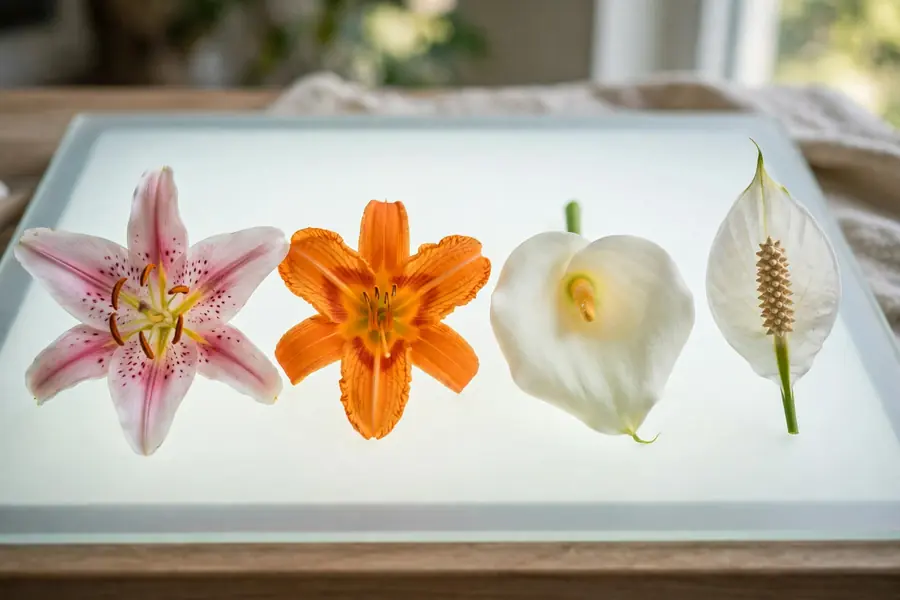
What is the difference between a lily and a daylily? A true lily grows from a bulb, has leaves arranged up the stem and each flower lasts several days. A daylily grows from a clump of roots, has leaves that arch from the base, and each bloom lasts only a day, though the plant keeps making new buds. "Ditch lily" is a common name for the orange daylily that grows along roadsides.
Is a calla lily a real lily? No. The calla lily (Zantedeschia) is in a different family. It is grown from a tuber or rhizome, and the white or colored "flower" is actually a hood-shaped spathe around a small spike. Calla lilies are often used in weddings and bouquets. Their meaning is tied to beauty, marriage and purity.
Is a peace lily a real lily? No. It is a popular houseplant with white spathes. Our guide to the peace lily covers its care and why it differs from true lilies.
Is lily of the valley a real lily? No. It is a small perennial with fragrant white bells, and every part of it is poisonous. It is the traditional birth flower for May.
What are the main types of lily?
Gardeners group true lilies into a few main divisions. They differ in bloom time, scent and flower shape.
| Type | Bloom time | Flower | Scent | Notes |
|---|---|---|---|---|
| Asiatic lilies | Early summer | Upward or outward-facing bowls in bright colors | Little or none | The easiest and earliest. Very cold hardy |
| Oriental lilies | Mid to late summer | Large, ruffled, outward-facing flowers | Strong | Includes Stargazer and Casablanca. Bigger and later than Asiatics |
| Trumpet lilies (Aurelian) | Midsummer | Long, fragrant trumpets, often white, pink or yellow | Strong | Tall and graceful, often 4 to 6 feet |
| LA hybrids | Early to midsummer | Large, waxy flowers in many colors | Light | A cross of Easter and Asiatic lilies with longer vase life |
| Orienpet (OT) lilies | Mid to late summer | Very tall, large and fragrant | Strong | A cross of Oriental and trumpet lilies, often 5 feet or taller |
| Species lilies | Varies | Wild forms such as tiger, Madonna and martagon lilies | Varies | Often the toughest and longest lived |
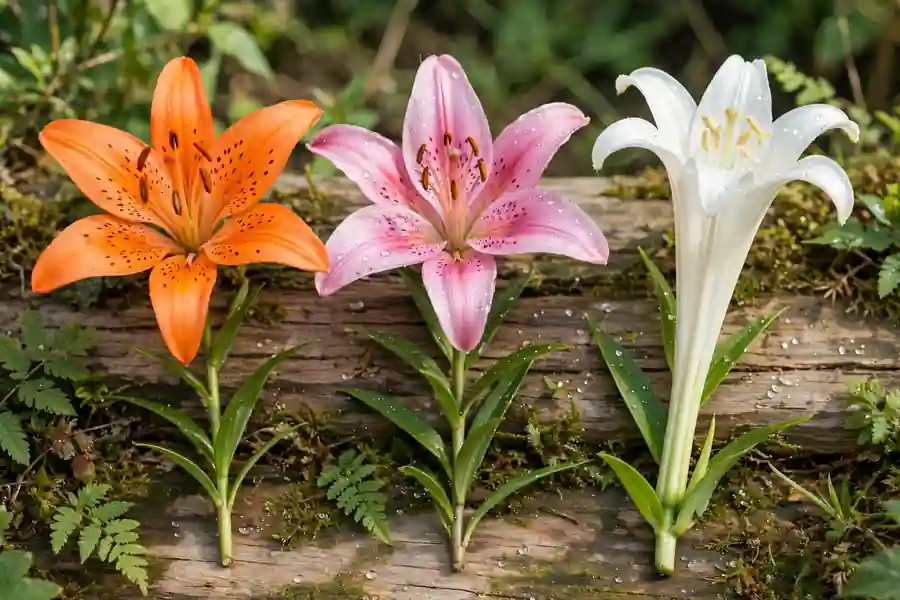
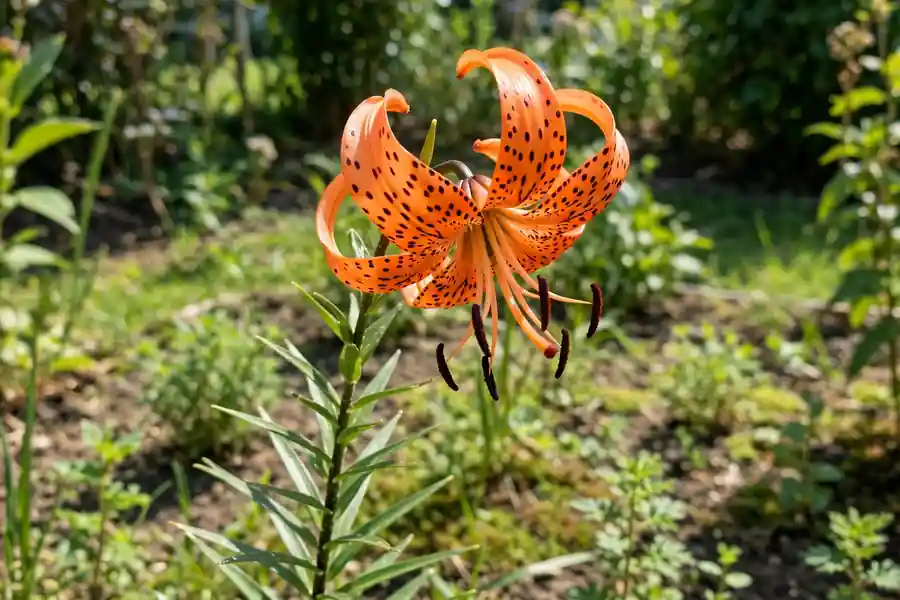
Tiger lily: the orange, black-spotted tiger lily (Lilium lancifolium) has curved-back petals and grows tiny black bulbils in the leaf joints. It spreads easily and can carry viruses that harm other lilies, so some gardeners keep it away from fancy hybrids. Plants called wild tiger lily may be a different native lily, so check the Latin name.
Stargazer lily: a pink, white-edged Oriental hybrid with upward-facing flowers and a strong scent. It is one of the best-known cut lilies.
Casablanca lily: a pure white, strongly scented Oriental lily with large flowers.
Easter lily: Lilium longiflorum has white trumpet flowers and is forced to bloom around Easter. Many gift plants can be planted outdoors after flowering in mild climates, and they often bloom again in a later summer.
Madonna lily: Lilium candidum is an old white garden lily with a sweet scent, long linked to the Virgin Mary in art.
Other lilies: the star lily, trumpet lily, Japanese lily, Chinese lily, giant lily (Cardiocrinum), martagon (Turk's cap) lily and "double" lilies are all variants within these groups. If a name has an unusual color, check whether it is a trade name for a hybrid.
What colors do lily flowers come in?
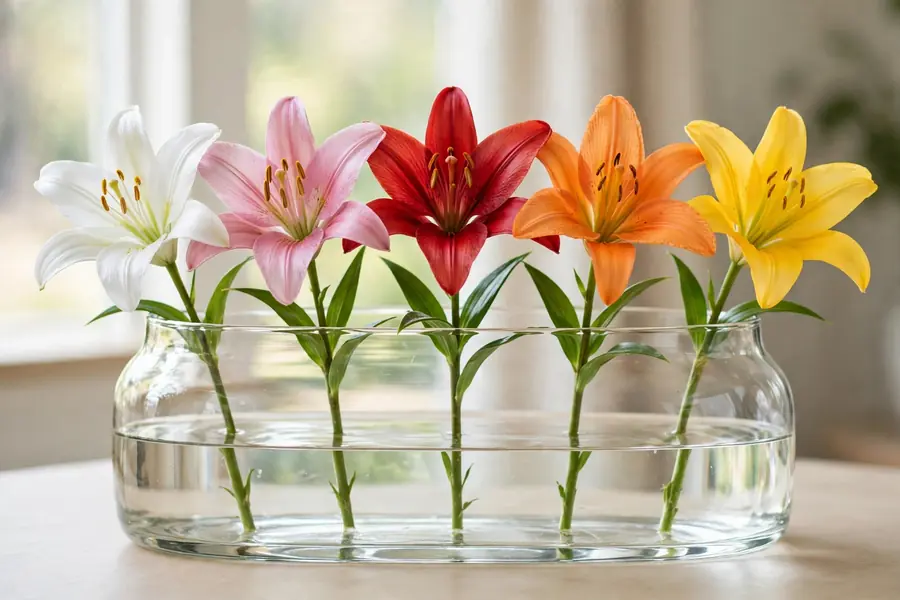
| Color | Examples | Notes |
|---|---|---|
| White | Easter lily, Madonna lily, Casablanca | The classic lily color |
| Pink | Stargazer, many Oriental hybrids | Light pink to deep rose |
| Red | Asiatic and Oriental hybrids | Bright to deep crimson |
| Orange | Tiger lily, Asiatic hybrids | Often with dark spots |
| Yellow | Trumpet, Asiatic and LA hybrids | Soft butter to golden |
| Purple | Orienpet hybrids, some Asiatic | Deep maroon-purple more than true violet |
| Near black | Dark maroon varieties | Look black in low light |
| Green-tinged | Some trumpet and Oriental varieties | White with a green throat or a lime tinge |
| Bicolor and spotted | Many Oriental hybrids | White with pink or red edges, or speckled throats |
Is there a blue lily? Not in the true lily genus. There is no naturally blue Lilium. Blue-looking "lilies" are other plants, such as agapanthus (lily of the Nile) and certain water lilies. Photos of blue lilies online are often edited. The "blue spider lily" in anime and games is fictional.
What about a real purple lily? Yes, purple lilies exist, but they are usually deep reddish-purple or plum shades, not a pure violet.
Color can look different in cool or hot weather, and many lily colors fade in strong afternoon sun.
What are the other lilies people search for?
Tiger lily vs daylily
The tiger lily is a true lily with spotted, curved petals. An orange daylily looks similar from a distance but has no spots, grows in clumps from the ground and has leaves that arch from the base.
Water lily and lily pad flowers
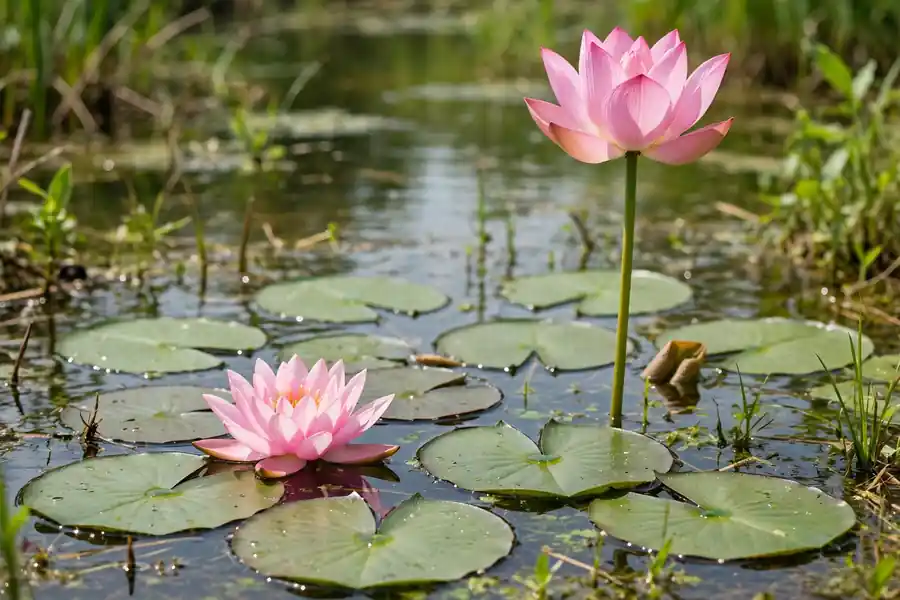
A water lily (Nymphaea) is an aquatic plant with round floating leaves called lily pads and flowers that sit on or just above the water. It is not a true lily.
Water lily vs lotus: lotus leaves and flowers rise high above the water on tall stems, the leaves are round and shield-like, and the seed pod looks like a showerhead. Water lily leaves float on the surface, have a notch, and flowers rest on or just over the water. They are separate plants.
Giant water lily: Victoria amazonica has huge floating pads that can span several feet and flowers that open at night.
Water lily birth flower: the water lily is the traditional birth flower for July, together with the larkspur.
Calla lily
Calla lilies have funnel-shaped spathes in white, yellow, pink, purple and near black. They grow from tubers, like moist, rich soil and are tender in cold areas, so many gardeners lift the tubers in fall. Callas can also be grown in pots.
Canna lily
Cannas grow tall with large paddle-shaped leaves and bright red, orange or yellow flowers. They are tropical perennials from rhizomes that are hardy in warm regions and dug up and stored in cold ones.
Spider lily
White spider lilies (Hymenocallis) have fragrant, spidery flowers. The red spider lily (Lycoris radiata), also called hurricane lily, blooms in late summer or fall on bare stems before the leaves appear. In parts of East Asia it is linked to autumn, farewell and graveyards, which is why it is sometimes called the "death flower" there. The bulbs are poisonous.
Lily of the valley
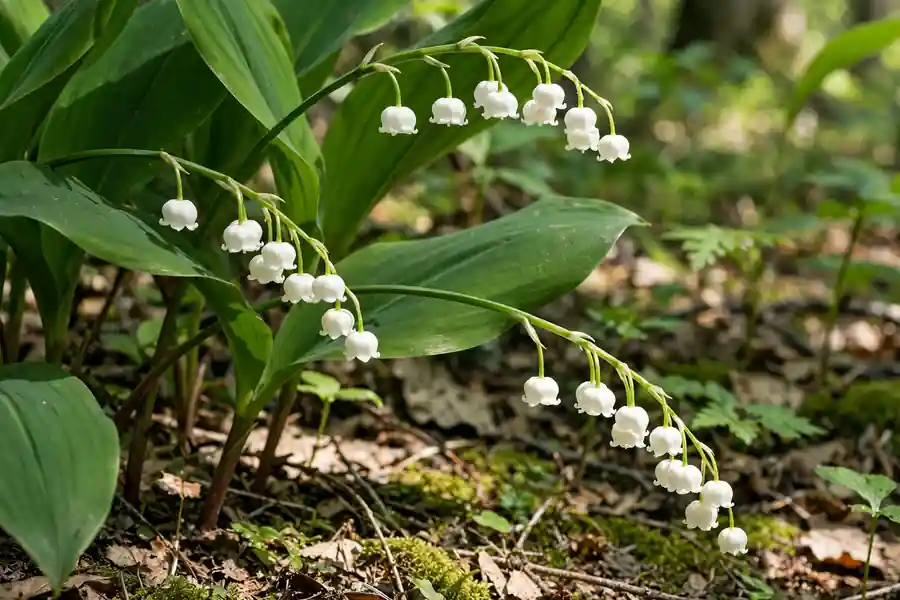
Lily of the valley is a spring-blooming ground cover with arching stems of tiny, sweet-smelling white bells. It spreads fast, thrives in shade, and is poisonous to people and pets if eaten. It is the traditional birth flower for May.
Other lilies
- Daylily: a tough, beginner-friendly perennial.
- African lily (Agapanthus): blue or white globes in summer.
- Peruvian lily (Alstroemeria): long-lasting, speckled flowers.
- Torch lily (Kniphofia): red-hot-poker spikes in orange and yellow.
- Fire or flame lily (Gloriosa): a climbing tropical lily with fiery flowers. All parts are toxic.
- Plantain lily (Hosta): grown for leaves, with lavender or white flowers.
- Toad lily: an unusual shade perennial.
- Rain lily: small, crocus-like flowers that bloom after rain.
- Sego lily: a wildflower and the state flower of Utah.
- Ginger lily: a fragrant tropical plant in the ginger family.
What does the lily flower mean?
Lily meaning varies by color, type and culture, and different sources do not agree on every detail. These are the most common ones:
| Lily | Common meaning |
|---|---|
| White lily | Purity, innocence, renewal. Linked to the Virgin Mary and to weddings and funerals |
| Pink lily | Love, admiration and prosperity |
| Red lily | Passion and devotion |
| Orange lily | Confidence, warmth and passion |
| Yellow lily | Gratitude and joy in many traditions. Some older flower language reads it differently |
| Tiger lily | Pride, courage and wealth |
| Calla lily | Beauty, marriage and rebirth |
| Water lily | Peace, purity and spiritual rebirth |
| Lily of the valley | Humility, sweetness and the return of happiness |
| Red spider lily | Farewell, memory and reunion in East Asian traditions |
Why are lilies used at funerals? White lilies stand for the soul returning to innocence and for renewed life. They are common in sympathy flowers and at Easter, where the Easter lily symbolizes resurrection.
What does a lily mean in love? Lilies often signal devotion, commitment and admiration. Pink and red lilies are used for romance.
Spiritual meaning: lilies are tied to purity, rebirth and the idea of life after loss in many faiths. In Christianity they are linked to Mary and to Easter. These meanings are traditions, not facts about the plant.
Black lily meaning: dark lilies are sometimes read as mystery or elegance. Usually it is just a stylish, deep color.
What is the lily birth flower?
- May: lily of the valley (with hawthorn).
- July: water lily (with larkspur).
- Lilies in general are sometimes listed for other months, but those two are the usual ones.
For a deeper look at how birth flowers work, see the guide to the November birth flower.
When do lilies bloom?
Lily bloom time depends on type:
- Early summer: Asiatic lilies, and many LA hybrids.
- Midsummer: trumpet lilies.
- Mid to late summer: Oriental lilies and Orienpets.
- Spring: lily of the valley.
- Summer into fall: daylilies, canna lilies, spider lilies.
You can stretch the season by planting early, mid and late types together. Each flower lasts about a week, and a stem with several buds can bloom for two to three weeks. In the vase, remove pollen-bearing anthers early to keep petals clean.
How do you grow lilies?
Lilies are easy and long-lived if their bulbs have good drainage and sun.
- Pick the right time. Plant bulbs in fall or in early spring, as soon as the ground can be worked.
- Choose a sunny spot. Aim for 6 or more hours of sun. Lilies like "heads in the sun, feet in the shade," so a low ground cover or shorter plants in front keeps the roots cool.
- Prepare the soil. Lilies need loose, well-drained soil. Heavy clay or wet spots cause bulb rot. Work in compost or sand to improve drainage. The compost guide explains how to make your own.
- Plant at the right depth. A common rule is about three times the height of the bulb, which is roughly 6 to 8 inches for large bulbs. Plant with the pointed end up.
- Space the bulbs about 8 to 12 inches apart.
- Water after planting, then keep soil lightly moist but never soggy during growth and bloom.
- Mulch 2 to 3 inches to hold moisture and keep roots cool.
- Feed with a balanced fertilizer when shoots emerge in spring.
- Stake tall types such as trumpets and Orienpets, especially in windy spots.
Planting lilies is similar to planting other fall bulbs, and the guide on how to plant tulip bulbs covers the general steps.
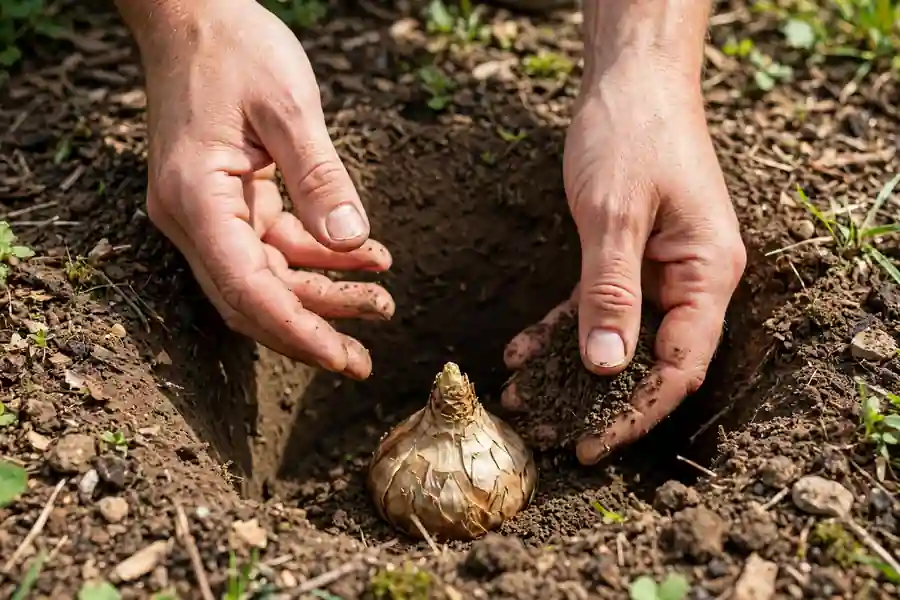
Can you grow lilies in pots? Yes. Use a deep pot with drainage holes and a well-drained potting mix, and plant bulbs close together. Water when the top inch is dry. In cold climates, protect potted bulbs in winter, because pots freeze harder than the ground.
Can you grow lilies from seed? Yes, but it takes several years to reach flowering size. Bulbs, or the small bulblets and bulbils that lilies produce, are faster.
How do you care for lilies after they bloom?
- Deadhead spent flowers by snapping off the faded blooms so the plant does not waste energy on seed. Leave the stem and leaves.
- Leave the foliage until it turns yellow in fall. The leaves feed the bulb for next year. Cutting them too early weakens the plant.
- Cut the stem to the ground after it dies back.
- Mulch in winter in cold climates.
- Divide crowded clumps every 3 to 4 years in fall. Dig up the bulbs, separate them and replant.
Why are my lilies not blooming?
| Reason | Fix |
|---|---|
| Too much shade | Move to a spot with 6 or more hours of sun |
| Planted too deep or too shallow | Replant at about three times the bulb height |
| Leaves cut too early last year | Let the foliage yellow naturally |
| Crowded bulbs | Divide every few years |
| Wet soil or rot | Improve drainage |
| Young or newly planted bulbs | Many bloom the first or second year, so be patient |
| Late frost or pests | Protect early shoots and check for damage |
What pests and problems do lilies get?
- Lily leaf beetle: a bright red beetle in some regions whose larvae strip leaves. Hand-pick beetles and check undersides of leaves.
- Aphids: can spread lily viruses. Rinse them off with water.
- Botrytis (gray mold): brown spots on leaves in cool, wet weather. Space plants for airflow and avoid wetting leaves.
- Bulb rot: from wet soil.
- Deer, rabbits and rodents: often eat buds and shoots. Fencing or repellents help.
Are lilies toxic to cats and dogs?
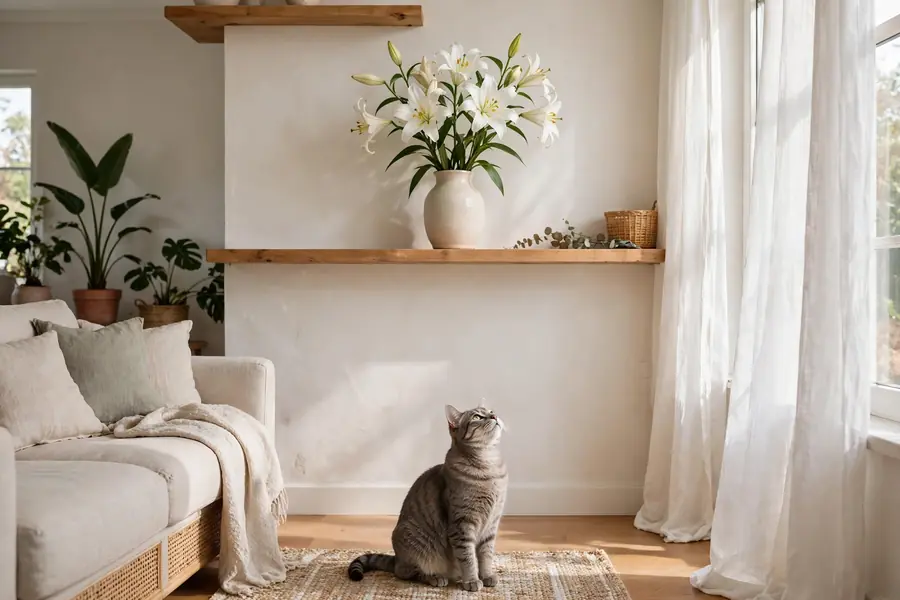
Lilies are extremely dangerous to cats. True lilies (Lilium) and daylilies (Hemerocallis) can cause acute kidney failure in cats, even from a very small amount. All parts are toxic, including the petals, leaves, pollen and the water in a vase. A cat that grooms pollen off its fur can get sick.
Signs in cats: vomiting, drooling, lethargy and loss of appetite, usually within hours. Kidney damage can follow within a day or two.
What to do: treat it as an emergency. Call a vet or the ASPCA Animal Poison Control Center at 888-426-4435 (a fee may apply) right away. Early treatment improves the odds, and waiting for symptoms to worsen is risky.
Dogs: lilies are much less dangerous to dogs. They may get mild stomach upset, such as vomiting or diarrhea, but do not usually get kidney failure. Lily of the valley is different because it is poisonous to dogs and people.
| Plant | Cat risk | Dog risk |
|---|---|---|
| True lilies (Lilium) | Severe kidney failure | Mild stomach upset |
| Daylilies | Severe kidney failure | Mild stomach upset |
| Calla and peace lily | Mouth irritation and drooling | Mouth irritation and drooling |
| Lily of the valley | Heart and stomach toxicity | Heart and stomach toxicity |
| Red spider lily | Stomach upset, drooling | Stomach upset, drooling |
If you have a cat, the safest approach is to avoid true lilies and daylilies in the house and in garden areas the cat can reach. Choose pet-safe flowers for bouquets, and ask for lily-free arrangements as gifts.
Is lily of the valley poisonous to people? Yes. All parts are toxic, and swallowing them can cause stomach upset and heart rhythm problems. Keep it away from children and pets, and wash your hands after handling it.
Are lilies safe to eat? No. Do not eat lily flowers from the garden. Some lily bulbs are eaten in parts of Asia, but they are specific edible species prepared in specific ways, and many lilies are toxic. Daylily flowers are eaten in some cuisines, but that is a different plant and still risky for cats.
Should you use lilies in cut flower arrangements?
Lilies last well in the vase, often a week or more. A few tips:
- Cut stems when the first bud is just starting to show color.
- Remove the pollen-covered anthers as flowers open, so the pollen does not stain.
- Change the vase water every couple of days and trim the stems.
- Keep them away from cats.
Lily stems are strongly scented, so a few stems are enough for a small room.
Quick answers to common questions
What is a lily flower?
A true lily flower is the bloom of a plant in the genus Lilium. It grows from a scaly bulb and has six petal-like segments, six stamens and one central pistil.
What does the lily flower mean?
Purity, renewal and devotion are the most common meanings. White lilies also appear at weddings and funerals, and different colors and types carry other meanings.
Are lilies toxic to cats and dogs?
True lilies and daylilies can cause kidney failure in cats, even from pollen or vase water, and need emergency care. Dogs usually get only mild stomach upset.
How do you grow lilies?
Plant bulbs in fall or early spring, about three times as deep as the bulb is tall, in full sun and well-drained soil. Water during growth and leave the leaves until they turn yellow.
What is the difference between a lily and a daylily?
A lily grows from a bulb and has leaves up the stem. A daylily grows from a clump of roots and has arching leaves from the base. Each daylily flower lasts only a day.
Keep reading: hibiscus flower, how to plant tulip bulbs, how to prune roses and more lawn and garden guides.
Is a lily flower worth growing?
Yes. A lily flower gives your garden tall, elegant, often fragrant blooms from a bulb you plant once and enjoy for years. Choose types that bloom at different times for a long season, give them sun and well-drained soil, and let the leaves die back naturally. If you share your home with cats, skip true lilies and daylilies altogether, and pick a safer flower. With the right choice, a lily flower is one of the most rewarding summer plants you can grow.