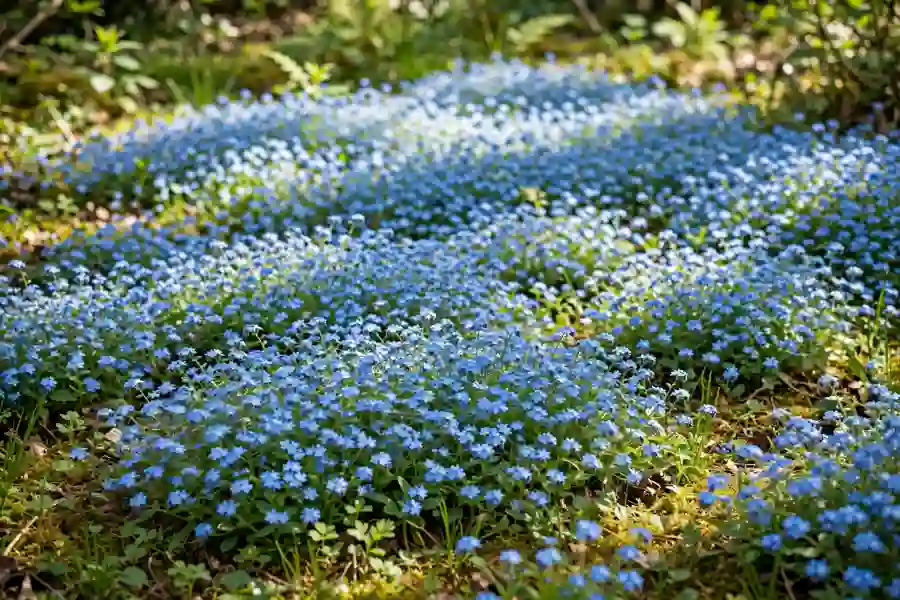
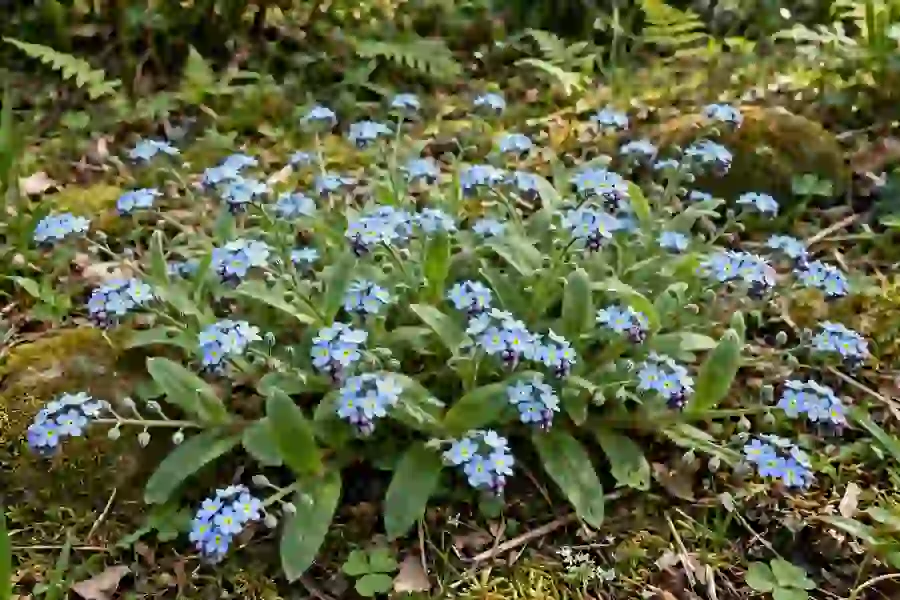
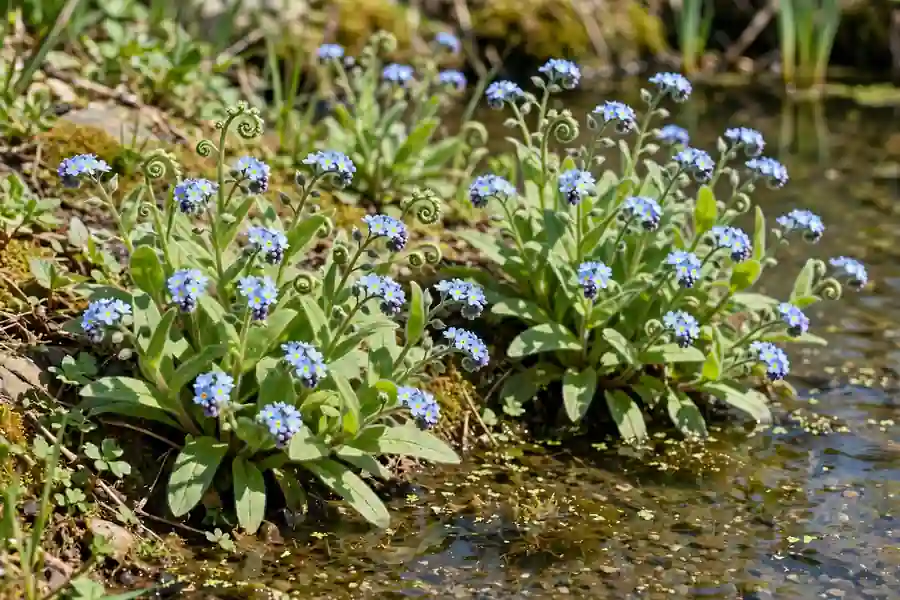
The forget me not flower (Myosotis) is a low plant with clusters of tiny sky-blue flowers that have yellow centers, and it stands for true love and remembrance. It grows 5 to 12 inches tall, blooms in spring, likes moist soil in part shade, and sows itself so freely that it keeps coming back. Sow seed in late spring to early summer or in fall, and expect flowers the next spring. It is also the state flower of Alaska.
Forget me not flower at a glance
| Question | Answer |
|---|---|
| Scientific name | Myosotis (about 50 species), in the borage family |
| Common types | Woodland (M. sylvatica), alpine (M. alpestris), water (M. scorpioides) |
| Flower | About 1/4 inch wide, five petals, usually blue with a yellow center |
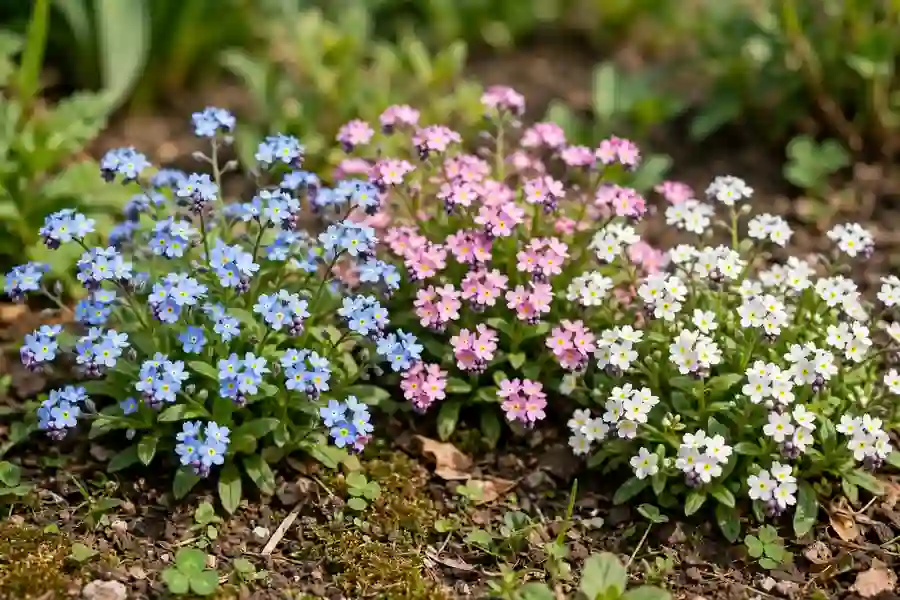
| Colors | Blue, pink, white, lavender and purple |
| Height | 5 to 12 inches for most. Some reach 18 inches |
| Bloom time | Spring, for about 4 to 8 weeks, from March to June depending on climate |
| Life cycle | Biennial or short-lived perennial that self-seeds, so it acts like a perennial |
| Light | Part shade. Full sun only in cool climates with steady moisture |
| Soil | Moist, rich, well-drained. Water types grow at pond edges |
| Hardiness | Roughly zones 3 to 8. Sources vary, so check the tag |
| Deer | Usually left alone by deer |
What does the forget me not flower mean?
| Meaning | Where it comes from |
|---|---|
| Remembrance and "don't forget me" | The name itself, a translation of the German Vergissmeinnicht |
| True love and fidelity | The medieval German legend of a knight and his lady |
| Faithfulness and loyalty | Used in love tokens and keepsakes |
| Memory and loss | Used in memorials, and as an awareness symbol for dementia |
| Hope and healing | Spring bloom after winter |
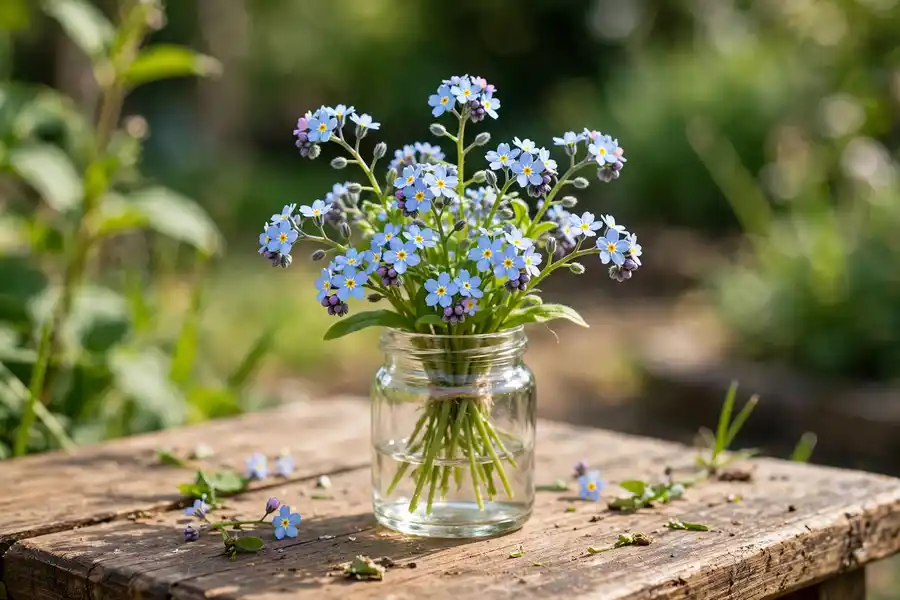
The legend: a knight walking by a river picked flowers for his lady. His armor pulled him under, and as he threw her the bouquet he called out "forget me not." The tale varies by source.
Spiritual meaning and symbolism: the flower is tied to love that lasts, to loved ones who have died, and to staying faithful across distance. Its color, blue, is linked with trust and peace.
Forget me not tattoo meaning: people choose it to remember a person, to mark loss (including the loss of a baby), or to stand for dementia or lasting love.
State flower: the wild alpine forget me not (Myosotis alpestris) is the state flower of Alaska. Most sources date its adoption to 1917, when Alaska was a territory.
Birth flower: it is not on the standard birth flower lists, though people link it to spring.
Day: we could not confirm an official forget me not day in the US. Some groups use the flower for remembrance events.
What does a forget me not flower look like?
| Part | What to look for |
|---|---|
| Flowers | Tiny, flat, five-lobed, in coiled clusters that uncurl as they open. Pink buds often turn blue as the flowers open |
| Center | Yellow or white eye ring |
| Leaves | Hairy, oblong and rough to the touch, in a loose rosette at the base. Early leaves appear before the flowers |
| Stems | Soft and branching, sprawling or mounded |
| Seeds | Tiny, dark and shiny, in small cups that cling to clothes and fur |
| Form | A low carpet or mound. It is not a tree or a bush |
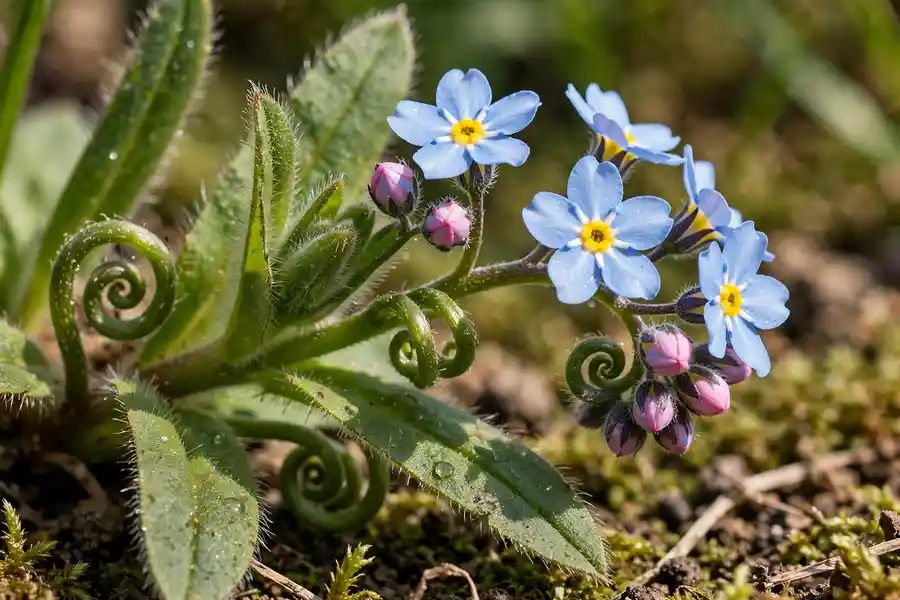
Colors: most are sky blue. Pink, white, lavender and purple forget me nots are bred forms. There is no true red or yellow one.
What are the types of forget me not?
| Type | Latin name | Key facts |
|---|---|---|
| Woodland forget me not (also wood or field) | Myosotis sylvatica | The common garden type. Biennial, 6 to 12 inches, blue, self-seeds |
| Alpine forget me not | Myosotis alpestris | Small, 4 to 8 inches, bright blue. Alaska's state flower |
| Water forget me not (true, aquatic) | Myosotis scorpioides | Perennial for wet soil and pond edges. Spreads by seed and creeping stems. Considered invasive in some regions |
| Early forget me not | Myosotis ramosissima | Small, flowers early, grows in poor soil |
| Chinese forget me not | Cynoglossum amabile | A different genus. Taller, 1 to 2 feet, blue to pink. Grown as an annual or biennial |
| Cape forget me not | Anchusa capensis | A different genus. Biennial or annual, bright blue |
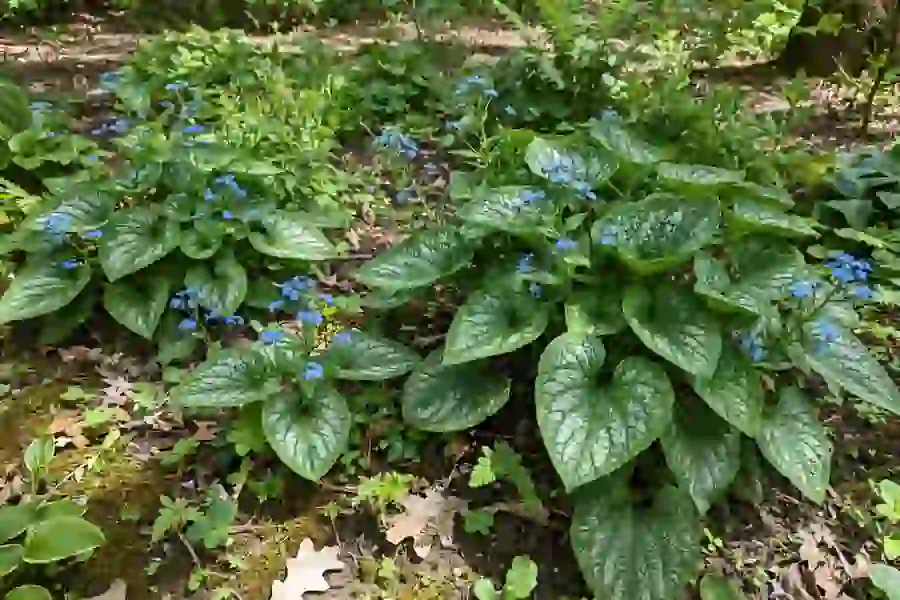
| False forget me not | Brunnera macrophylla | A different genus. Perennial for shade. Big heart-shaped leaves, some silver. Blooms in spring |
Forget me not vs Chinese forget me not: the Chinese type is taller, has a coarser look, and its flowers are bigger, but it is not a true forget me not. It is a relative of hound's tongue. Do not let livestock graze it.
Forget me not vs false forget me not: Brunnera has the same tiny blue flowers, but it is a bigger perennial with large heart-shaped leaves and it grows in shade.
Varieties: names vary by seed supplier. Common ones include 'Victoria Blue', 'Blue Bird', 'Royal Blue', 'Rosylva' (pink) and 'Alba' (white).
Are forget me nots annuals or perennials?
Most are biennials or short-lived perennials. The woodland type grows leaves the first year, flowers the next spring, then sets seed and dies. Because it drops thousands of seeds, new plants appear each year, so the patch seems perennial. The water forget me not is a true perennial. Chinese and Cape types are grown as annuals or biennials.
Growth stages: seed, then tiny seedlings, then a leafy rosette (first summer and fall), then spring flowering, then seed and decline.
Do forget me nots like sun or shade?
They prefer part shade and cool, moist soil. In cool climates they grow in full sun if the soil stays damp. In hot places, give afternoon shade, or they burn and stop flowering early. Deep shade gives leggy plants and few flowers.
When and how do you plant forget me not seeds?
When:
- Late spring to early summer: sow outdoors for flowers next spring. This is the usual method for woodland types.
- Fall: direct sow in mild climates or sow in a cold frame, and they bloom the following spring.
- Indoors: sow 8 to 10 weeks before the last frost, then plant out after frost. Plants may bloom the first year, but later than fall-sown ones.
- Nursery plants: set out in spring after the last frost, or in fall in mild climates.
How:
- Choose a part-shaded spot with rich, moist, well-drained soil. Mix in compost. Our how to compost guide covers making your own.
- Scatter the seed on the surface and press it in, or cover with a very thin layer of soil (about 1/8 inch).
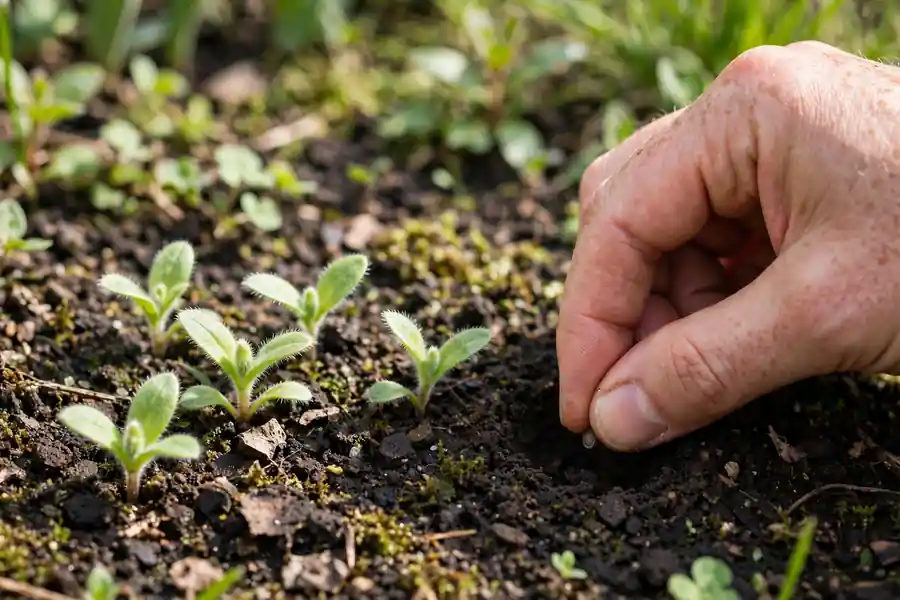
- Keep the soil evenly moist. Seeds sprout in about 1 to 3 weeks.
- Thin seedlings to 6 to 12 inches apart.
- Mulch lightly and water in dry spells.
Seedlings are tiny and fuzzy. Do not pull them thinking they are weeds.
How do you care for forget me nots?
| Task | What to do |
|---|---|
| Water | Keep the soil moist, never soggy. Water weekly in dry spells |
| Feeding | Light feeding with compost in spring. Rich feed gives leaves, not flowers |
| Mulch | A thin layer keeps roots cool and the soil damp |
| Deadheading | Skip it if you want self-seeding. Cut faded stems if you want to stop spread |
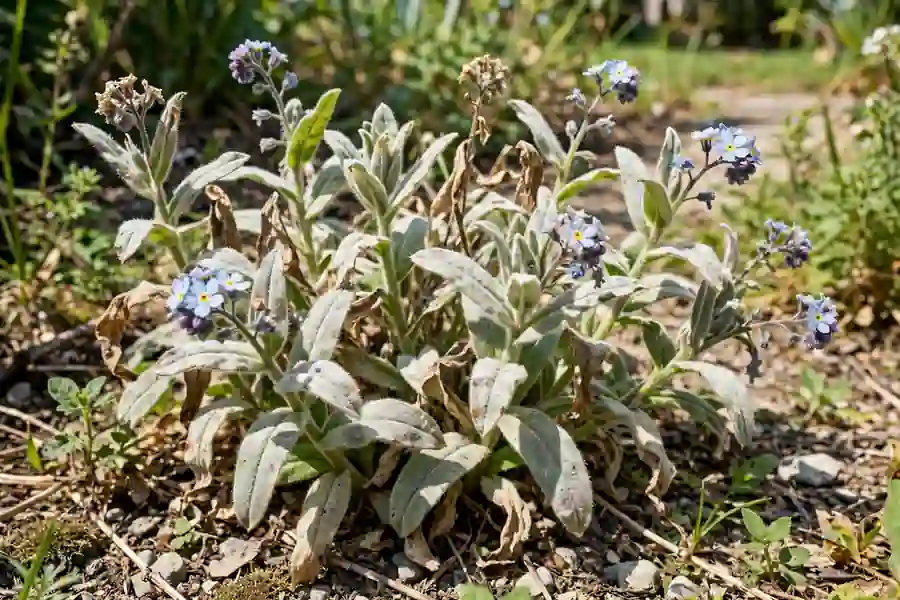
| After bloom | Pull or cut plants once they look tired, usually early summer. Shake the seed heads where you want next year's plants |
| Winter | Hardy. Leave the rosettes in place |
Pests and problems:
| Problem | Fix |
|---|---|
| Powdery mildew (white coating, common after bloom) | Give air flow, avoid overhead water, pull plants after flowering |
| Slugs and snails | Hand-pick or use slug bait |
| Aphids | Spray with water or insecticidal soap |
| Yellowing leaves | Overwatering or poor drainage |
| Leggy plants | Too much shade or rich feed |
| Wilting | Dry soil. Water deeply |
Do forget me nots spread, and are they invasive?
Yes, they spread by seed and can pop up everywhere. They are easy to pull, but the water forget me not can form dense mats and is listed as invasive in some regions. Check your local invasive list before planting it, and keep any type away from natural wetlands, streams and wild areas. To stop spread, remove the flowers before seed forms.
Are forget me nots poisonous or edible?
True forget me nots (Myosotis) are not listed as toxic to cats and dogs, but check with your vet if a pet eats a lot. Chinese forget me not and hound's tongue (Cynoglossum) are different. They contain compounds that can damage the liver, and the ASPCA lists hound's tongue as toxic to horses, so keep them away from livestock and do not eat them.
Edible and medicinal uses: the plant has a folk history in herbal medicine, but there is no solid evidence it helps, and many members of the borage family contain harmful compounds. Do not eat it or make tea from it. Treat the flowers as ornamental only.
What grows well with forget me nots?
They fill the gaps around spring bulbs and hide fading bulb leaves. Good partners are tulips, daffodils, bleeding heart, hellebores, primroses, columbine, hostas and ferns. For bulb planting steps, see our how to plant tulip bulbs guide.
Garden ideas: edge a woodland path, carpet under trees and shrubs, plant in a rock garden or cottage garden, or grow water forget me nots at the edge of a pond.
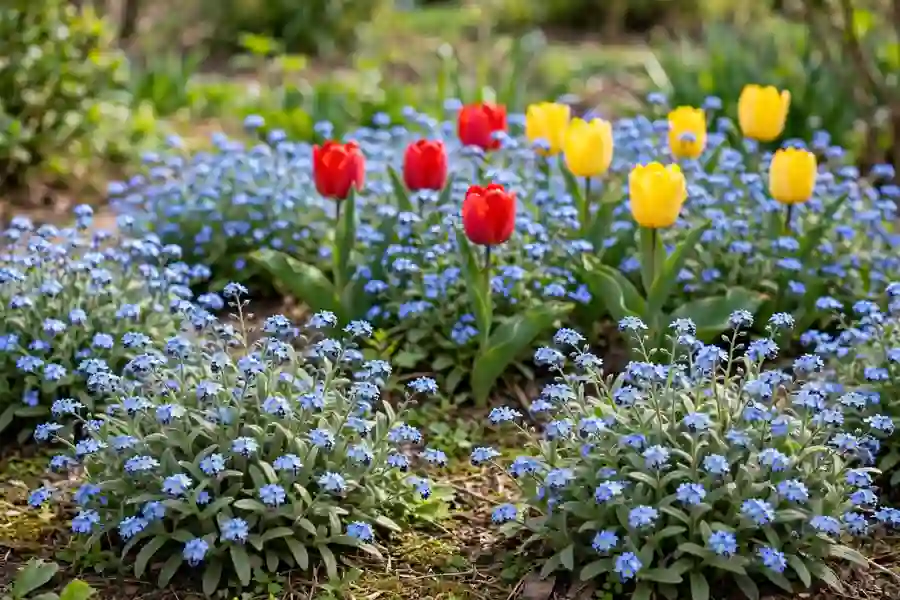
Ground cover: they work as a seasonal ground cover in cool, shady, moist beds. They are not a permanent one, since they die back after flowering.
In pots: use a pot 8 to 12 inches wide, rich potting mix and part shade. Keep it moist. Forget me nots in pots look best in spring, then move or replace them as the heat arrives.
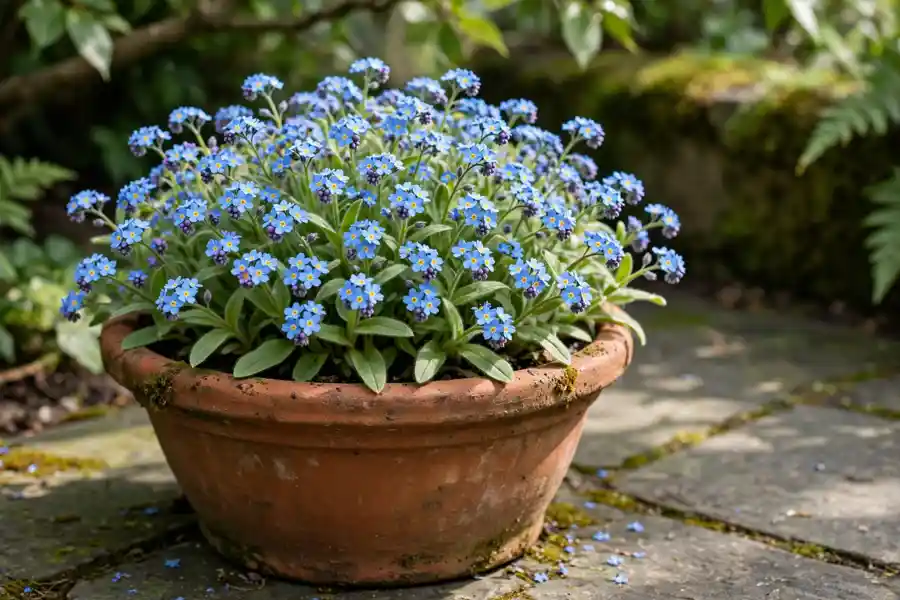
Cut flowers: the stems are short and the flowers are delicate. They last a few days in a small vase, and are best used in tiny posies.
Quick answers to common questions
What does the forget me not flower mean?
True love, faithfulness and remembrance. The name comes from the German Vergissmeinnicht, "forget me not."
Are forget me nots annuals or perennials?
Mostly biennials or short-lived perennials that self-seed, so they seem perennial. The water type is a true perennial.
Do forget me nots like sun or shade?
Part shade with moist soil. Full sun works only in cool climates with steady water.
When do you plant forget me not seeds?
Late spring to early summer or fall for flowers the next spring. Indoor sowing starts 8 to 10 weeks before the last frost.
Are forget me nots invasive or poisonous?
They spread freely by seed, and the water type is invasive in some regions. True forget me nots are not listed as toxic to pets, but Chinese forget me not is a different, toxic plant.
Keep reading: how to plant tulip bulbs, pink flowers, November birth flower, how to plant lavender and more lawn and garden guides.
Should you grow a forget me not flower?
Yes, if you have a shady, damp spot. A forget me not flower gives a haze of blue in spring and returns by itself every year. Pull the extras after bloom, and keep it out of wild areas.